
Learn › Jewish ideas › G-d, faith and holiness
Miracles: A Jewish View of the Wonders Big and Small
What Judaism teaches about miracles: the open ones of Chanukah and Passover, the hidden ones of every day, and how to notice them in your own life.
Part 21 of 24 · Life's big questions
On this page · 3 min read
Open miracles and hidden miraclesNature is a miracle tooNoticing your own miraclesDo we rely on miracles?When the miracle does not comeA sick child recovers. A near-accident ends with everyone safe. A chance meeting changes a life. Most of us have a story we can only call a miracle. Judaism has a lot to say about such moments, and even more about the quiet wonders we stop noticing.
Open miracles and hidden miracles
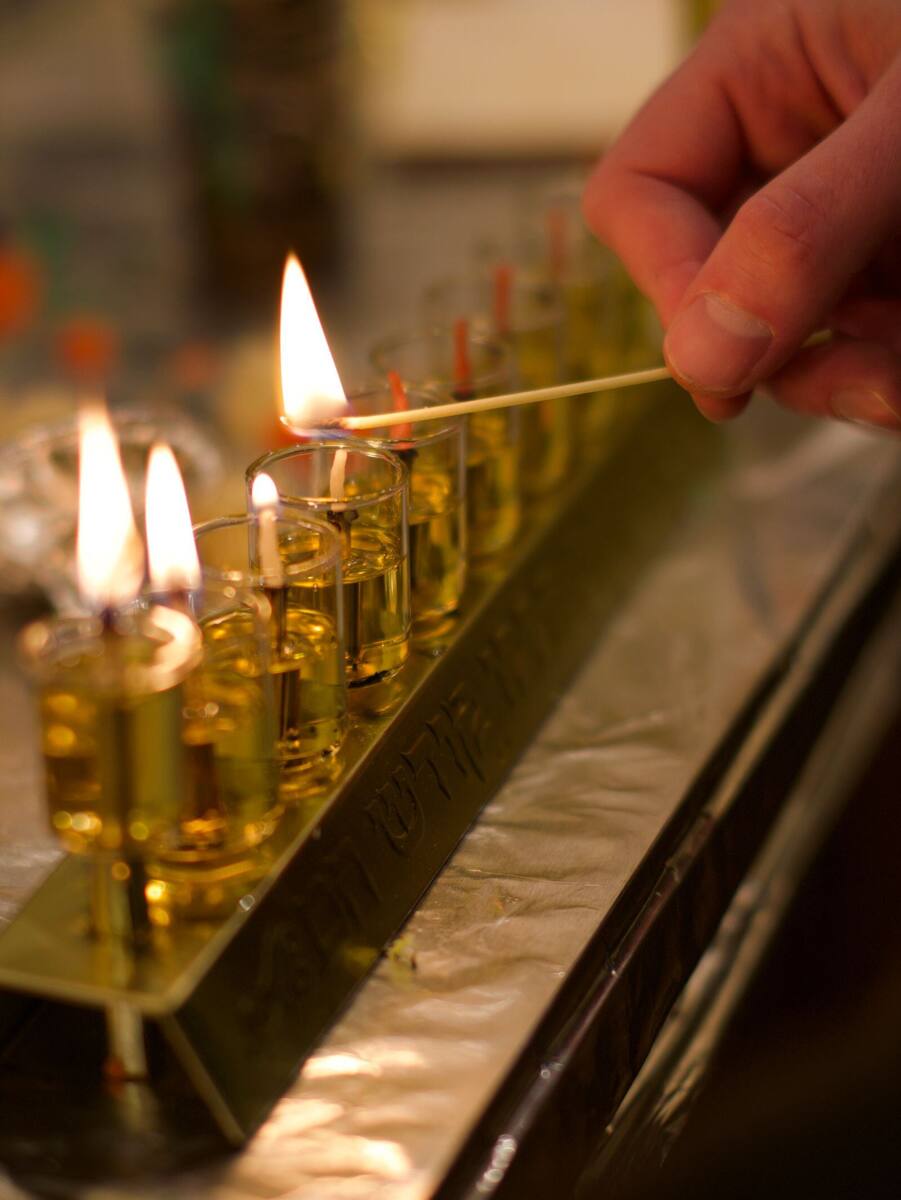
The Torah tells of open miracles: the Ten Plagues, the splitting of the Sea, manna in the desert. On Chanukah we celebrate the small jug of pure oil that burned for eight days. These are moments when G-d sets nature aside and everyone can see it.
The sages also speak of hidden miracles, wrapped in nature so well that they look like ordinary events. Purim is the great example: the Book of Esther never mentions G-d's name, yet a chain of "coincidences" saved the Jewish people. The great commentator Nachmanides (the Ramban) taught that a person who truly believes sees that everything, the rain, health, a good livelihood, is a hidden miracle.
Nature is a miracle too
Chassidic teaching, from the Baal Shem Tov and the Tanya, goes a step further: G-d does not create the world once and then leave it alone. He creates it anew every moment. Nature is not a machine running by itself; it is G-d's constant kindness, so regular that we call it "nature." The Hebrew word for nature, teva, has the same numerical value as Elokim, a name of G-d that describes Him hidden in the world.
That is why three times a day, in the Amidah, we thank G-d "for Your miracles that are with us every day, and for Your wonders and kindnesses at every time, evening, morning and noon."
Noticing your own miracles
The Talmud says that the person a miracle happens to often does not recognize it. A few Jewish habits help us notice:
- Say a blessing. There are blessings for lightning, a rainbow, the ocean and a tree in bloom. See blessings on nature.
- Say Birkat HaGomel after coming through danger, an illness or a flight over the ocean. See Birkat HaGomel.
- Thank out loud. Tell your family the story at the Shabbat table. Gratitude grows when it is shared. See gratitude.
- Give tzedakah in thanks; many families give chai, 18, after good news.
Do we rely on miracles?
No. Judaism teaches that we do not rely on miracles: we see a doctor, drive carefully and work for a living, and we also pray and trust. The Maccabees picked up swords, and then G-d gave them victory. Our effort is the vessel; the blessing is G-d's. See bitachon, trust in G-d.
When the miracle does not come
Sometimes we pray with all our heart and the answer is not what we hoped. Judaism does not ask us to pretend otherwise. It allows us to cry, to ask "why," and to be held by community. Many people find that even in the darkest times, small kindnesses appeared that they could only see later. If you are going through this, please talk with the Rabbi or the Rebbetzin.
In Lamorinda: Something wonderful happened, or you need a miracle right now? Rabbi Yisroel and Rebbetzin Tzipora Labkowski are here for families in Lafayette, Moraga and Orinda: 925-384-7242.
Common questions
What miracle do we celebrate on Chanukah?
Two: the victory of the few Maccabees over the mighty Greek army, and the jug of pure oil, enough for one day, that burned for eight. We add Al HaNissim, "for the miracles," to our prayers all eight days. See the Chanukah story.
Do miracles still happen today?
Yes. Judaism teaches that G-d is involved in every detail of life, which Chassidic teaching calls hashgacha pratit, divine providence. See divine providence.
Is there a blessing when a miracle happens to me?
After coming safely through danger, people say Birkat HaGomel at the Torah reading. When you return to a place where a miracle happened to you, there is a blessing too. Ask the Rabbi about your situation.
Can I pray for a miracle?
Yes. You can pray for anything, in your own words, in any language. See talking to G-d in your own words.
Step by step · Part 21 of 24
Life's big questions
NextThe Afterlife in Judaism: What Happens After We Die?What Judaism teaches about life after death, Gan Eden, the World to Come and the resurrection, and how the living can help a loved one's soul.All 24 parts
- Why Be Jewish? What Makes Jewish Life Worth Living
- What Does "the Chosen People" Mean in Judaism?
- Belief in G-d in Judaism: What Jews Believe About G-d
- Fear of G-d: What Yirat Shamayim Really Means
- How Can You Love G-d? The Mitzvah of Ahavat Hashem
- Doubts About G-d: A Jewish Approach to Questions of Faith
- What Do Jews Believe? Maimonides' 13 Principles of Faith
- Torah and Science: Can a Thinking Person Believe?
- Who Wrote the Torah? The Jewish Answer and Why It Matters
- Why Pray If G-d Already Knows What We Need?
- Does G-d Answer Prayers? A Jewish View of Yes, No and Not Yet
- The Soul in Judaism: What Is a Neshamah?
- Why Am I Here? The Jewish View of Life's Purpose
- Tikkun Olam: What "Repairing the World" Really Means in Judaism
- Free Will in Judaism: Do We Really Choose?
- Why Do Bad Things Happen? A Jewish View of Suffering and Faith
- The Book of Job: What It Teaches About Suffering
- Angry at G-d: A Jewish Answer for When It Hurts
- Hope in Hard Times: What Judaism Teaches About Not Giving Up
- Hashgacha Pratit: Divine Providence in Everyday Life
- Miracles: A Jewish View of the Wonders Big and Small
- The Afterlife in Judaism: What Happens After We Die?
- Moshiach: The Jewish Belief in the Messiah and the Messianic Era
- Techiyat HaMeitim: The Jewish Belief in the Resurrection of the Dead
Questions about this, or something on your mind? Message the Rabbi or the Rebbetzin privately, or call 925-384-7242. · Email
Read next
 The Chanukah Story: The Maccabees and the Miracle of the OilThe story of Chanukah in plain English: the Greek decrees, the Maccabees' revolt, the miracle of the oil, and what it means today.Read next →