

Getting Married Jewishly: Planning a Jewish Wedding
Call the Rabbi. We are here to help.
Call 925-384-7242TextWhatsAppSend a message
Or talk privately with Rebbetzin Tzipora Labkowski: 925-384-7241 · WhatsApp
Mazal Tov on your engagement! A Jewish wedding is the beginning of a new Jewish home, and it would be our joy to be part of it. Rabbi Yisroel Labkowski and Rebbetzin Tzipora Labkowski of Chabad of Lamorinda help couples plan a beautiful, meaningful Jewish wedding, from the very first meeting to the chuppah. Call 925-384-7242 to set up a time to meet.
Step by step
- Meet with the Rabbi. Ideally several months before the wedding. We will get to know you, talk about your plans, and answer your questions.
- Confirm Jewish details. The Rabbi will gently ask about your Jewish background. This is standard for every Jewish wedding and helps everything go smoothly. If either of you was married before, a Jewish divorce (get) may be needed. The Rabbi will guide you.
- Choose a date. Jewish weddings are not held on Shabbat, Jewish holidays, or certain periods of the year. The Rabbi will help you pick a good date.
- Prepare the ketubah. The Jewish marriage contract, with your Hebrew names and your parents' Hebrew names.
- Prepare for the mikvah. The bride's visit to the mikvah before the wedding is a beautiful and private moment. The Rebbetzin can guide the bride.
- Plan the ceremony. Choosing witnesses, the people who will hold the chuppah, and those honored with blessings.
The ketubah
The ketubah is a legal document in Aramaic that sets out the husband's commitments to his wife. It is signed by two kosher witnesses before the ceremony and read under the chuppah. Many couples choose a beautiful artistic ketubah to hang in their home. The Rabbi will make sure the text is correct.
The mikvah
Before the wedding, the bride immerses in a mikvah, a pool of natural water. It is a spiritual new beginning, and a central part of Jewish married life. The Rebbetzin is glad to meet privately with the bride to explain and prepare. Learn more in our mikvah guide.
The wedding day
- The fast. Many brides and grooms fast on their wedding day until the ceremony, as a personal Yom Kippur, a fresh start.
- The badeken. The groom veils the bride.
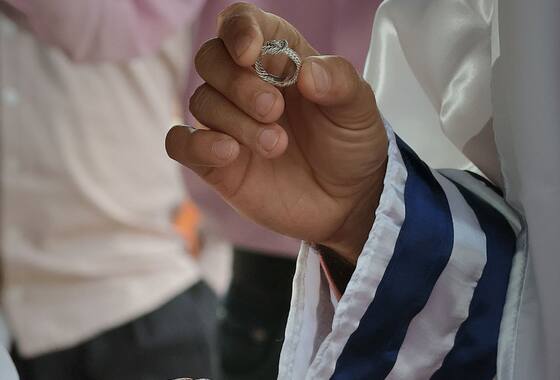
- The chuppah. Under the wedding canopy, blessings are said over wine, the groom gives the bride a ring, the ketubah is read, and the Seven Blessings (Sheva Brachot) are recited.
- Breaking the glass. Remembering Jerusalem even at our greatest joy.
- Yichud. A few private minutes together right after the ceremony.
Then comes the celebration. Learn more in our Jewish wedding guide.
After the wedding
Building a Jewish home is a lifelong journey. We are here for you after the wedding too: for Shabbat, holidays, a mezuzah for your new home, and simply as friends.

Tehillim: Finding a match (shidduch)
Which chapters to say, with the text.

Sponsor in honor or memory of a loved one
A parent, a teacher, a friend: anyone you want to honor.
Common questions
How far in advance should we contact the Rabbi?
As early as you can, ideally several months before. It gives time to plan the details calmly.
Can the Rabbi officiate at our wedding?
The Rabbi officiates at Jewish weddings according to Jewish law. Call him to talk about your plans. He will explain everything clearly and warmly.
We are an interfaith couple. Can we talk to the Rabbi?
Yes. The Rabbi is happy to meet with you and have an honest, caring conversation about your situation and the Jewish view.
What do we need to bring to the first meeting?
Just yourselves. If you have them, documents such as your parents' ketubah can help confirm Jewish background, but the Rabbi will guide you.
Do we need to belong to a synagogue?
No. Chabad of Lamorinda welcomes every Jewish couple, whatever your background.
Send the Rabbi a message
Read next
 The Jewish Wedding: Traditions and Ceremony Explained Step by StepA step-by-step guide to the Jewish wedding: the ketubah, chuppah, ring, seven blessings, breaking the glass, and what they mean.Read next →