

Parashat Achrei Mot
Leviticus · Leviticus 16:1-18:30
Parashat Achrei Mot אחרי מות
After the passing of Aaron's two sons, G-d instructs that Aaron may not enter the Holy of Holies whenever he wishes, but only on Yom Kippur, following a detailed service. The High Priest wears white linen garments, brings offerings for himself and his household, and brings two goats for the people. Lots are drawn: one goat is offered to G-d, and the other is sent away into the wilderness to Azazel, carrying the sins of Israel. The High Priest enters the inner sanctum with a pan of incense, so that its cloud fills the room, and sprinkles the blood of the offerings. The Torah establishes the tenth day of the seventh month as a day of fasting and atonement forever. The portion then forbids bringing offerings outside the Sanctuary and consuming blood, and commands covering the blood of a slaughtered bird or wild animal. Finally, it warns Israel not to follow the practices of Egypt and Canaan, and lists the forbidden intimate relationships.
A lesson for today
In this portion the Torah says that a person shall keep G-d's laws and live by them. Our Sages learn from these words that mitzvot are meant to bring life, and that saving a life takes precedence over almost every commandment. The Rebbe added a deeper meaning: we should live with the mitzvot, doing them with vitality and joy, not as a burden. A mitzvah done with life and enthusiasm gives life back to the one who does it.
The Rebbe's teachingA storyIdeas for the Shabbat tableAn essay
The Rebbe's teaching
A moment of closeness to G-d is meant to send us back into the world, not to take us out of it. Parshat Achrei Mot begins after the death of Aaron's two sons, Nadav and Avihu, who died when they drew near to G-d. The Rebbe asks a hard question: the Sages say that Moses considered them greater than himself and Aaron, so why did they die?
Drawing on Chassidic thought, the Rebbe explains that their fault was not an ordinary wrongdoing. Their longing to cleave to G-d burned so intensely that their souls left their bodies. They sought the ecstasy of closeness without any plan to return to the world. The Midrash lists several faults, such as entering without the proper garments and not marrying, and the Rebbe sees one root behind them all: the idea that we come close to G-d by withdrawing from life rather than by taking part in it.
The Talmud tells of four sages who entered a mystical "orchard." Only Rabbi Akiva "entered in peace and left in peace." He went in with the intention to return. That is the model, and it is also the model for Aaron on Yom Kippur. He is told to enter the Holy of Holies with awe and humility, and he comes out to pray for the people's livelihood.
What it means for us: all of us have moments of spiritual intensity, on Shabbat, at a festival, at Yom Kippur, at a Jewish wedding or a funeral. The Rebbe teaches that the point of these moments is not the feeling itself. The point is what we do with it afterward, in our kitchens, offices and friendships. A high that does not reach Monday morning has missed its purpose. A high that does reach Monday morning makes the world itself a place where G-d is at home.
A story
A well-known story; its details cannot be confirmed. On Yom Kippur eve the congregation in Liadi waited for their rebbe, Rabbi Shneur Zalman, the Alter Rebbe, to begin Kol Nidrei. He stood absorbed in thought with his tallit over his head. Then, suddenly, he took off his tallit and his white kittel and left the synagogue.
The chassidim waited for more than two hours. At last he returned, put on his holy garments and began to pray.
Only afterward did they find out where he had been. On the outskirts of town, a woman had just given birth while her husband was away on business. Her neighbors were all at the synagogue. She was alone with her newborn in the cold, with no wood for a fire and no cooked food, because she had not been able to prepare anything before the fast.
The Alter Rebbe had cut down a tree, chopped it into firewood, lit a fire and made her a warm soup. He came back to the synagogue only after she had eaten. In Jewish law, saving a life overrides even Yom Kippur. The story reminds us that the holiest moment of the year and the humblest act of kindness are not opposites.
Ideas for the Shabbat table
- Ask: what was the most spiritual moment you ever had? What did you do the next day because of it?
- For children: what is the difference between feeling kind and doing a kind thing? Share one kind thing you will do on Sunday.
- Discuss: why do you think the Torah says Aaron had to come out of the Holy of Holies again?
- Ask the adults: how can we make Shabbat last into Monday? Pick one Shabbat feeling to take to work.
- Talk about the story: the Alter Rebbe left the most important prayer of the year to help one person. When is helping someone more important than where we planned to be?
- Read more about Yom Kippur for beginners and Aaron the High Priest.
An essay
Almost every one of us has had a moment that felt like a doorway opening. Maybe it was a Shabbat dinner, a trip to Israel, a moment under the wedding canopy, or a quiet minute beside someone we love who is ill. For a little while the world feels clear and our own priorities rearrange themselves. And then, usually within days, we are back to traffic, email and carpools.
Parshat Achrei Mot does not scold us for that. It teaches something wiser. The Rebbe's explanation of Nadav and Avihu is that closeness to G-d without a return ticket is incomplete. G-d wants a home in the physical world, and we are the ones who build it, through ordinary acts: a business done honestly, a table set for guests, a phone call to someone who is lonely.
This is why the Torah gives such careful instructions to Aaron on Yom Kippur. He enters the Holy of Holies, but his service is not complete until he steps back out into the camp to pray for the people. The holiest place in the world is not a destination. It is a source.
Here is a small way to practice it. After the next moment that moves you, a Shabbat meal, a prayer, a good class, ask: what is one concrete thing this makes me want to do differently on Monday? Write it down. Do only that one thing.
If you would like to experience Shabbat in Lafayette, call Chabad of Lamorinda at 925-384-7242, or join the Wednesday 1:00 PM Tanya class at the Rabbi's home (call for the address).
Common questions
What is Parshat Achrei Mot about?
Parshat Achrei Mot (Leviticus 16:1-18:30) describes the Yom Kippur service of the High Priest and then gives laws of holiness and of proper relationships. It begins after the death of Aaron's two sons.
What does the Rebbe teach about Parshat Achrei Mot?
The Rebbe teaches that moments of spiritual intensity must lead back into everyday life. He explains the death of Nadav and Avihu as a longing for G-d so strong that it forgot to return to the world.
Why is Achrei Mot connected to Yom Kippur?
The portion describes the order of the High Priest's service on Yom Kippur, the one day he entered the Holy of Holies. You can learn about the holiday in our Yom Kippur guide and see more at this week's parsha.
Learn more
 The Weekly Parsha: How the Torah Is Read Each WeekWhat the weekly Torah portion (parsha) is, how the 54 portions fit the Jewish year, and easy ways to study and discuss the parsha each week.
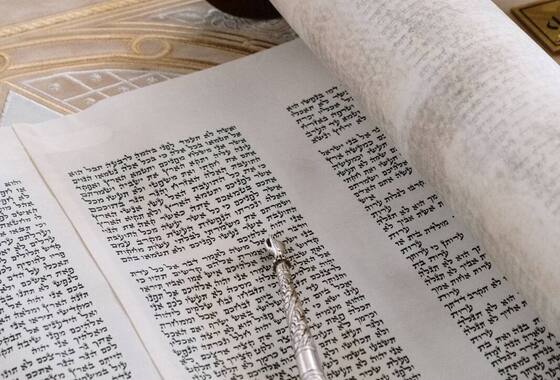 The Torah Reading in Synagogue: When, Why and HowWhen the Torah is read in synagogue, how the weekly cycle works, what happens during the reading, and what to do as it takes place.
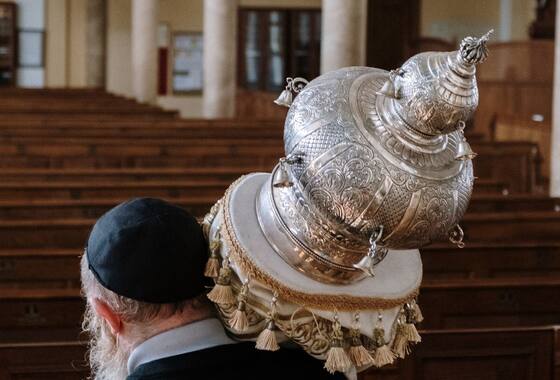 The Haftarah: What It Is and Why We Read ItWhat the Haftarah is, how it began, how it connects to the weekly Torah portion, who reads it, and what to know for a bar mitzvah.