
Learn › Prayer & Torah › Tefillin, tallit, tzitzit and kippah
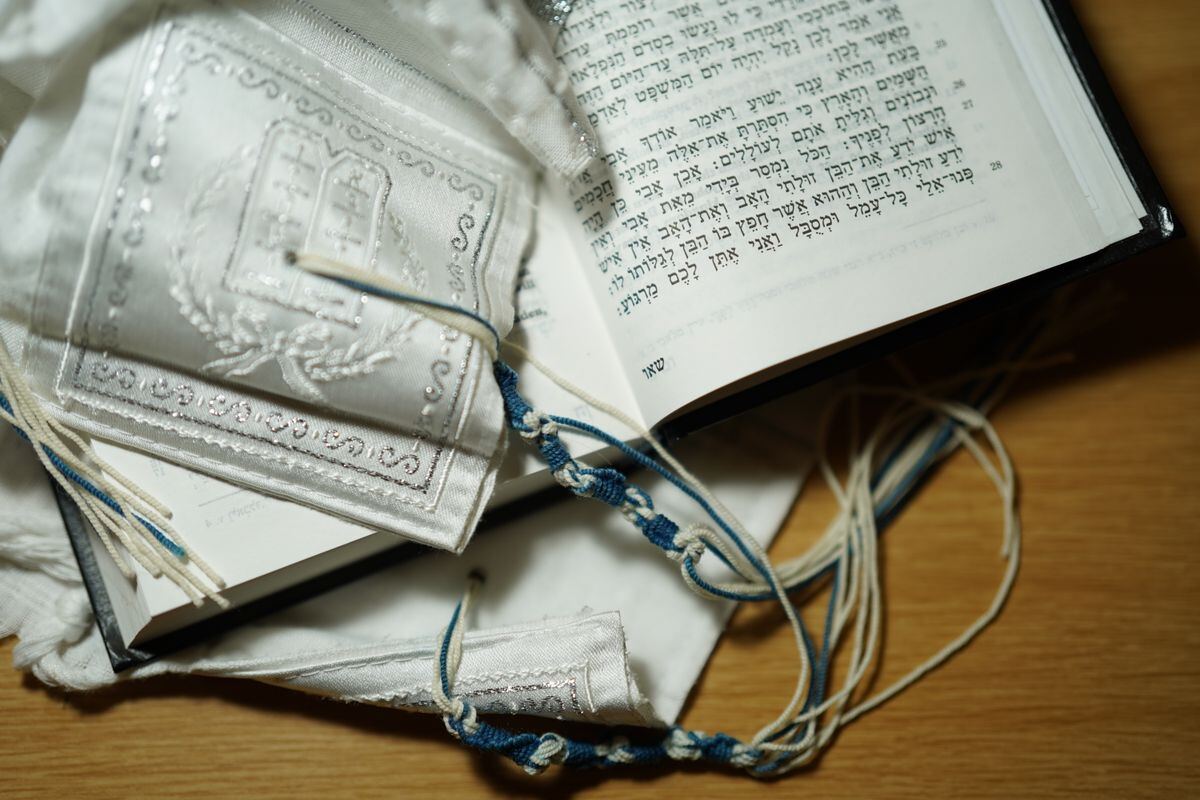
The Tallit: The Jewish Prayer Shawl Explained
What a tallit is, the mitzvah of tzitzit behind it, who wears one and when, the blessing in Hebrew and English, and how to put it on.
On this page · 2 min read
What a tallit isWho wears a tallit and whenHow to put on a tallitThe blessingThe meaning of the tallitA tallit is the Jewish prayer shawl, a four-cornered garment with special fringes called tzitzit on each corner. It is worn during morning prayers, wrapping the one praying in a mitzvah that recalls all of G-d's commandments.
What a tallit is
The mitzvah of the tallit comes from the Torah: "They shall make for themselves fringes on the corners of their garments... and you shall see it and remember all the commandments of the L-rd" (Numbers 15:38 to 39).
The holiness of the tallit is in the tzitzit, the strings tied in a precise pattern of windings and knots. The garment itself is usually made of wool, often white with black or blue stripes.
There are two kinds:
- Tallit gadol, "large tallit," the prayer shawl worn during morning prayers.
- Tallit katan, "small tallit," worn under or over the shirt all day, usually simply called tzitzit.
Who wears a tallit and when
The tallit is worn during Shacharit, the morning prayer, on weekdays, Shabbat and holidays. It is not worn at night, since the Torah says "and you shall see it," referring to daylight. The exception is Yom Kippur, when the tallit is worn at Kol Nidrei and throughout the day.
Customs differ about when a man begins wearing a tallit gadol. In Chabad and many Ashkenazi communities, men begin after marriage, and boys wear tzitzit from a young age. In Sephardic and some other communities, boys wear a tallit from bar mitzvah or even earlier.
How to put on a tallit
- Check the tzitzit to make sure all the strings are whole.
- Hold the tallit open and say the blessing (below).
- Wrap it over your head and shoulders, briefly covering your head, and pause for a moment.
- Let it rest on your shoulders, with tzitzit hanging in front and behind.
- Put on tefillin after the tallit on weekdays.
The blessing
Hebrew: בָּרוּךְ אַתָּה ה' אֱלֹקֵינוּ מֶלֶךְ הָעוֹלָם, אֲשֶׁר קִדְּשָׁנוּ בְּמִצְוֹתָיו, וְצִוָּנוּ לְהִתְעַטֵּף בַּצִּיצִית
Transliteration: Baruch atah Ado-nai, Elo-heinu melech ha'olam, asher kid'shanu b'mitzvotav, v'tzivanu l'hitatef ba'tzitzit.
Translation: Blessed are You, L-rd our G-d, King of the universe, who has made us holy with His commandments, and commanded us to wrap ourselves in tzitzit.
The meaning of the tallit
The Sages note that the numerical value of the word tzitzit is 600. Add the eight strings and five knots on each corner and you get 613, the number of mitzvot in the Torah. Wearing the tallit is like being embraced by all of G-d's commandments at once.
In Lamorinda: Looking to get a tallit or learn how to put one on? Call Rabbi Labkowski at 925-384-7242 and we will gladly help.
Common questions
Can I borrow a tallit in synagogue?
Yes. Most synagogues keep spare tallitot for guests. If you borrow one, say the blessing as usual.
What should I do with an old tallit?
A tallit with worn tzitzit can have new strings tied. A tallit that is no longer used is treated respectfully, often buried or placed in a genizah.
Why do some people kiss the tzitzit?
During the Shema, the tzitzit are gathered and kissed when the paragraph about tzitzit is said. It shows love for the mitzvah.
Is a tallit buried with a person?
Yes. It is customary to bury a man in his tallit, with one of the tzitzit made unfit. See our guide to the Jewish funeral.
Questions about this, or something on your mind? Message the Rabbi or the Rebbetzin privately, or call 925-384-7242. · Email
Read next
 Tzitzit and Tallit: What They Are and How to Wear ThemWhat tzitzit and the tallit are, who wears them, the meaning of the fringes, how to put them on, and the blessings in Hebrew and English.Read next →