
Learn › Shabbat & holidays › Passover
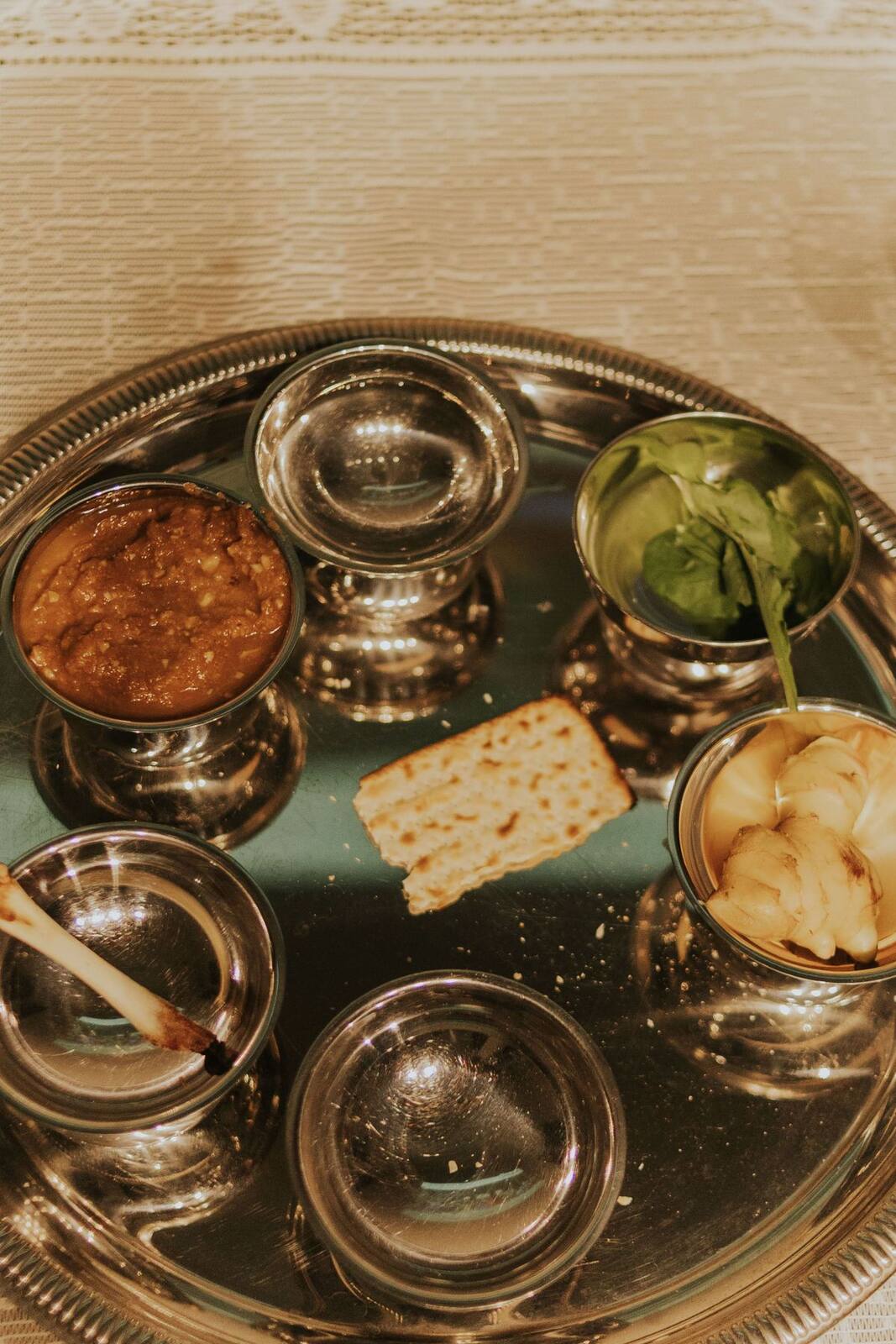
The Seder Plate: What Goes On It and How to Arrange It
The six items on the Passover seder plate, what each one means, and how to arrange the plate step by step according to Chabad custom.
Part 14 of 30 · Passover, step by step
On this page · 2 min read
The items and their meaningThe three matzahsHow to arrange the plate, step by stepPreparing the plateUsing the plate during the sederThe seder plate (ke'arah) holds the symbolic foods used at the Passover seder: the shank bone, egg, bitter herbs, charoset, vegetable and a second bitter herb. Together with three matzahs, it tells the story of slavery and freedom right on the table.
The items and their meaning
- Zeroa (shank bone): recalls the Passover offering brought in the Holy Temple. Chabad custom uses a roasted chicken neck with most of the meat removed. It is not eaten at the seder.
- Beitzah (egg): a hard-boiled egg, recalling the festival offering (chagigah) in the Temple. It is also a sign of mourning for the Temple.
- Maror (bitter herbs): recalls the bitterness of slavery. Chabad uses grated horseradish and romaine lettuce together.
- Charoset: a paste of apples, pears, nuts and wine, recalling the mortar the Jews used to make bricks in Egypt.
- Karpas (vegetable): dipped in salt water at the start of the seder. Chabad custom uses raw onion or boiled potato.
- Chazeret (second bitter herb): used for the "Korech" sandwich of matzah and maror. Chabad uses horseradish and romaine here too.
Salt water is placed near the plate, not on it.
The three matzahs
Under or beside the plate are three whole shmurah matzahs, covered with a cloth. In Chabad custom they are placed one above the other, separated by cloths, on a plate or tray, with the seder items on top of the cover. The three matzahs are called Kohen, Levi and Yisrael.
How to arrange the plate, step by step
The Chabad arrangement follows the Arizal, the great Kabbalist, and forms two triangles:
- Top right: zeroa (shank bone).
- Top left: beitzah (egg).
- Center, below them: maror.
- Below the maror, on the right: charoset.
- Below the maror, on the left: karpas.
- Bottom center: chazeret.
"Right" and "left" are from the point of view of the person leading the seder. Many Haggadahs include a diagram you can follow.
Preparing the plate
- Roast the zeroa and boil the egg before the holiday.
- Prepare plenty of maror and charoset, since everyone at the table needs a portion. Horseradish is grated before the holiday begins, and lettuce should be washed and carefully checked for insects. See our guide to checking for insects.
- Each head of household may have their own plate. Guests can share from the leader's plate.
Using the plate during the seder
The plate is not just decoration. During the seder you will:
- Dip the karpas in salt water.
- Break the middle matzah for the afikoman.
- Point to the matzah and maror while explaining them.
- Eat matzah, then maror dipped in charoset, then the Korech sandwich.
Learn the full order in our Passover seder guide.
In Lamorinda: Order handmade shmurah matzah for your seder at jewishlamorinda.com/forms/matzah or call 925-384-7242.
Common questions
Do I need a special seder plate?
No. Any large plate works as long as the items are arranged correctly. A beautiful plate honors the mitzvah, but it is not required.
Can I use a lamb shank bone?
Many communities do. Chabad and others prefer a chicken neck so that it does not look like a real Passover offering, which can only be brought in the Temple.
What do I do with the items after the seder?
The egg can be eaten at the meal, and many eat it dipped in salt water. The zeroa is not eaten at the seder, since roasted meat is avoided that night. Ask the Rabbi about using it afterward.
Can a vegetarian have a seder plate?
Ask the Rabbi. Some use a roasted beet in place of the bone. The main mitzvot, matzah, maror and the four cups, do not require meat.
Step by step · Part 14 of 30
Passover, step by step
NextThe Haggadah: What It Is, How to Read It and Choosing OneWhat is a Haggadah? What is inside, how to read it at the Seder with guests and kids, and how to choose one with Hebrew, English or Russian.All 30 parts
- Passover for Beginners: What to Do and How to Prepare
- Maot Chitim: Helping Others Have a Passover (Wheat Money)
- Chametz: What It Is and How to Get Rid of It Before Passover
- Passover Cleaning Without the Stress: What You Really Need to Do
- Selling Your Chametz Before Passover: How It Works
- Shabbat HaGadol: The Great Shabbat Before Passover and Why It Is Called Great
- The Fast of the Firstborn and the Siyum Before Passover
- Kosher for Passover: What It Means and How to Prepare
- Kitniyot: Rice, Beans and Corn on Passover and Who Avoids Them
- Passover Shopping: What Needs a Kosher-for-Passover Label
- A Simple Passover Seder Menu: Charoset, Brisket and a Cooking Plan
- Matzah: What It Is and Why Shmurah Matzah Matters
- Gluten-Free Matzah: Passover with Celiac or a Wheat Allergy
- The Seder Plate: What Goes On It and How to Arrange It
- The Haggadah: What It Is, How to Read It and Choosing One
- How to Host a Passover Seder: A Calm, Step-by-Step Plan for First-Timers
- The Passover Seder: A Simple Step-by-Step Guide
- The Four Cups of Wine at the Seder: Why, When and How Much
- The Four Questions (Mah Nishtanah): Words, Meaning and Who Asks
- The Afikoman: Meaning, Hiding Custom and When to Eat It
- Dayenu, Chad Gadya and the Songs of the Seder: Meaning and Why We Sing
- The Exodus Story: How the Jews Left Egypt
- The Ten Plagues of Egypt in Order: What Happened and What They Teach
- The Last Days of Passover: The Splitting of the Sea and Moshiach's Meal
- Counting the Omer: How to Count the 49 Days From Passover to Shavuot
- Lag BaOmer: Bonfires, Rabbi Shimon and a Day of Joy
- Shavuot for Beginners: The Ten Commandments, Dairy Foods and Learning All Night
- The Book of Ruth: Summary and Why We Read It on Shavuot
- Staying Up to Learn on Shavuot Night (Tikkun Leil Shavuot)
- Shavuot With Kids: Why Children Hear the Ten Commandments, Plus Activities
Questions about this, or something on your mind? Message the Rabbi or the Rebbetzin privately, or call 925-384-7242. · Email
Read next
 The Passover Seder: A Simple Step-by-Step GuideWhat the Passover Seder is, the 15 steps in order, what goes on the Seder plate, the four cups and four questions, and tips for hosting your own.Read next →