
Learn › Shabbat & holidays › Passover
Matzah: What It Is and Why Shmurah Matzah Matters
What matzah is, the mitzvah of eating it at the Passover Seder, what shmurah matzah means, how much to eat, and the blessing in Hebrew and English.
Part 12 of 30 · Passover, step by step
On this page · 2 min read
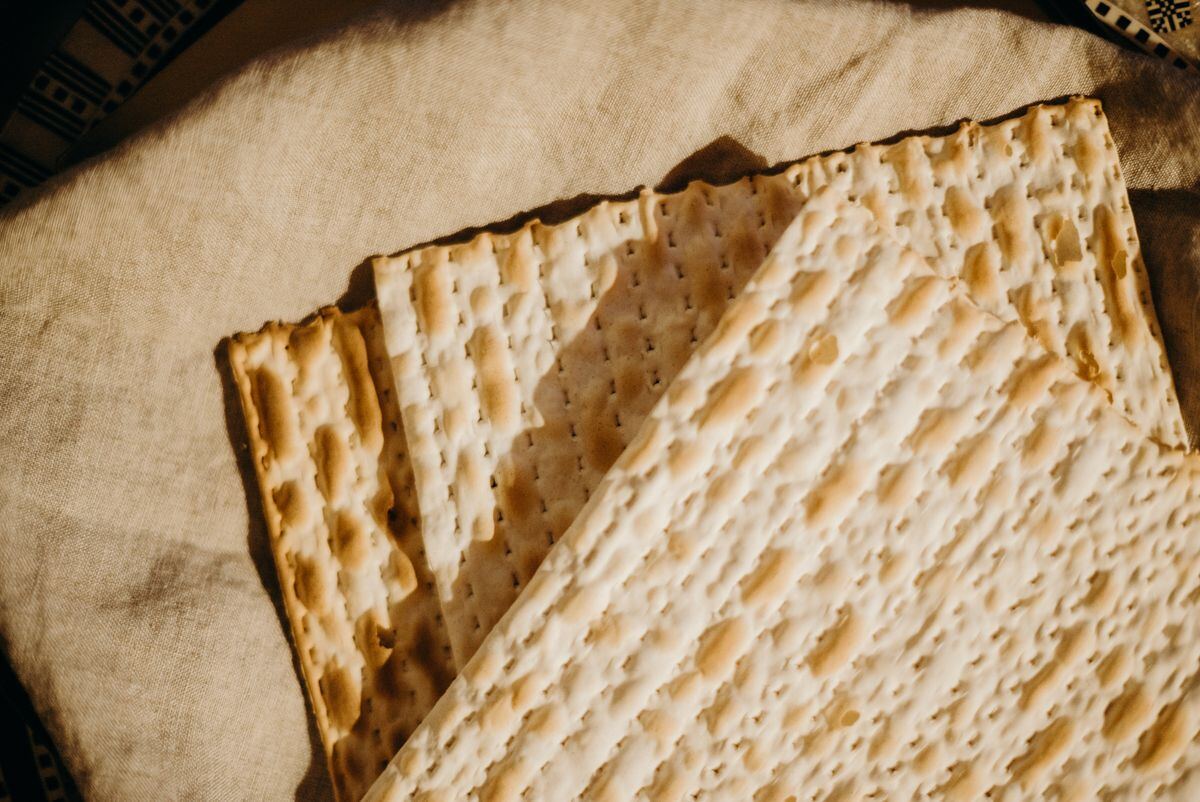
What is matzah?Why we eat matzahWhat is shmurah matzah?How much to eat at the SederThe blessingMatzah during the rest of PassoverMatzah is flat, unleavened bread made only of flour and water, baked quickly before it can rise. Eating matzah on the first night of Passover is a mitzvah from the Torah, and we eat it in place of bread for the whole holiday.
What is matzah?
Matzah is made from one of five grains, usually wheat, mixed only with water. From the moment the water touches the flour until the matzah comes out of the oven, the dough is kneaded and worked constantly, and the whole process takes less than 18 minutes. This keeps it from becoming chametz.
Why we eat matzah
The Torah calls matzah "the bread of affliction" (Deuteronomy 16:3), the simple food of slaves. It is also the bread of freedom. When the Jewish people left Egypt, they left so quickly that their dough did not have time to rise.
The Zohar calls matzah "the food of faith" and "the food of healing." Chassidic teaching explains that matzah, flat and humble, represents setting aside our ego so G-d's light can enter.
What is shmurah matzah?
Shmurah means "guarded." Shmurah matzah is made from wheat watched from the time it was harvested, to make sure no water touched it. It is usually round and baked by hand, as matzah was baked for centuries.
- Each matzah is made with the intention that it is for the mitzvah.
- Many have the custom to use only handmade shmurah matzah for the Seder, and some are stringent and use it throughout Passover; ask the Rabbi about the custom in your home.
- Machine-made shmurah matzah also exists, and all kosher for Passover matzah is supervised. But the matzah at the Seder should be shmurah.
How much to eat at the Seder
At the Seder, there are several times we eat matzah:
- Matzah: after the blessings, a portion of about one ounce or more (a kezayit, the size of an olive by halachic measure). Many eat more.
- Korech: a sandwich of matzah with bitter herbs.
- Afikoman: a final piece at the end of the meal.
Lean to the left while eating matzah, as a sign of freedom. Try to eat each portion within a few minutes.
The blessing
Before eating the matzah at the Seder, we say Hamotzi and then this blessing:
Hebrew: בָּרוּךְ אַתָּה ה' אֱלֹקֵינוּ מֶלֶךְ הָעוֹלָם, אֲשֶׁר קִדְּשָׁנוּ בְּמִצְוֹתָיו, וְצִוָּנוּ עַל אֲכִילַת מַצָּה
Transliteration: Baruch atah Ado-nai, Elo-heinu melech ha'olam, asher kid'shanu b'mitzvotav, v'tzivanu al achilat matzah.
Translation: Blessed are You, L-rd our G-d, King of the universe, who has made us holy with His commandments, and commanded us concerning eating matzah.
Matzah during the rest of Passover
After the Seder nights, eating matzah is not required, but it is a mitzvah to enjoy it, and it takes the place of bread. Whenever you eat a meal with matzah, wash your hands as you would for bread, say Hamotzi, and say Grace after Meals.
In Lamorinda: Order handmade shmurah matzah for your Seder at jewishlamorinda.com/forms/matzah or call 925-384-7242.
Common questions
Why is matzah not eaten before Passover?
Many have the custom not to eat matzah from Rosh Chodesh Nissan, or at least on the day before Passover, so that it is eaten with appetite and freshness at the Seder.
What is egg matzah?
Egg matzah is made with fruit juice or eggs instead of water. Ashkenazi custom is not to eat it on Passover except for the elderly or sick, and it cannot be used for the Seder.
Can I use gluten-free matzah?
Matzah for the mitzvah must be made from one of the five grains. Oat matzah exists for those with gluten sensitivities. People with celiac disease or other conditions should ask the Rabbi.
What is gebrokts?
Gebrokts means matzah that has come into contact with water, such as matzah balls. Chabad and many Chassidic communities avoid gebrokts on the first seven days of Passover.
Step by step · Part 12 of 30
Passover, step by step
NextGluten-Free Matzah: Passover with Celiac or a Wheat AllergyIs there gluten-free matzah for the Seder? Learn about oat matzah, why rice or potato matzah does not count, and how to plan Passover with celiac disease.All 30 parts
- Passover for Beginners: What to Do and How to Prepare
- Maot Chitim: Helping Others Have a Passover (Wheat Money)
- Chametz: What It Is and How to Get Rid of It Before Passover
- Passover Cleaning Without the Stress: What You Really Need to Do
- Selling Your Chametz Before Passover: How It Works
- Shabbat HaGadol: The Great Shabbat Before Passover and Why It Is Called Great
- The Fast of the Firstborn and the Siyum Before Passover
- Kosher for Passover: What It Means and How to Prepare
- Kitniyot: Rice, Beans and Corn on Passover and Who Avoids Them
- Passover Shopping: What Needs a Kosher-for-Passover Label
- A Simple Passover Seder Menu: Charoset, Brisket and a Cooking Plan
- Matzah: What It Is and Why Shmurah Matzah Matters
- Gluten-Free Matzah: Passover with Celiac or a Wheat Allergy
- The Seder Plate: What Goes On It and How to Arrange It
- The Haggadah: What It Is, How to Read It and Choosing One
- How to Host a Passover Seder: A Calm, Step-by-Step Plan for First-Timers
- The Passover Seder: A Simple Step-by-Step Guide
- The Four Cups of Wine at the Seder: Why, When and How Much
- The Four Questions (Mah Nishtanah): Words, Meaning and Who Asks
- The Afikoman: Meaning, Hiding Custom and When to Eat It
- Dayenu, Chad Gadya and the Songs of the Seder: Meaning and Why We Sing
- The Exodus Story: How the Jews Left Egypt
- The Ten Plagues of Egypt in Order: What Happened and What They Teach
- The Last Days of Passover: The Splitting of the Sea and Moshiach's Meal
- Counting the Omer: How to Count the 49 Days From Passover to Shavuot
- Lag BaOmer: Bonfires, Rabbi Shimon and a Day of Joy
- Shavuot for Beginners: The Ten Commandments, Dairy Foods and Learning All Night
- The Book of Ruth: Summary and Why We Read It on Shavuot
- Staying Up to Learn on Shavuot Night (Tikkun Leil Shavuot)
- Shavuot With Kids: Why Children Hear the Ten Commandments, Plus Activities
Questions about this, or something on your mind? Message the Rabbi or the Rebbetzin privately, or call 925-384-7242. · Email
Read next
 The Passover Seder: A Simple Step-by-Step GuideWhat the Passover Seder is, the 15 steps in order, what goes on the Seder plate, the four cups and four questions, and tips for hosting your own.Read next →