
Learn › Prayer & Torah › The Torah, the Tanach and the weekly parsha
The Song of Songs (Shir HaShirim): Why We Read a Love Song on Passover
What the Song of Songs (Shir HaShirim) means in Jewish tradition, why it is read on Passover, and when it is read. A warm, simple guide.
On this page · 3 min read
What is the Song of Songs?Why do we read it on Passover?When is it read?What it teaches, simplyA few famous versesThe Song of Songs (שִׁיר הַשִּׁירִים, Shir HaShirim) is a book of the Bible in the form of a love song, attributed to King Solomon. In Jewish tradition it is a parable of the love between G-d and the Jewish people, and it is read on Passover because the Exodus was the beginning of that relationship.
What is the Song of Songs?
It is one of the books of the Tanach, written by King Solomon, traditionally in his wisdom. It is a poem between a beloved and her love, full of images of gardens, spring, vineyards and longing. The Sages read it as a deep allegory: the beloved is the Jewish people, and the love is G-d. The title "Song of Songs" means the best of songs. The Sages taught that the world was never as worthy as on the day the Song was given, and that all the writings are holy but the Song is "holy of holies."
Why do we read it on Passover?
There are two reasons. First, the Song speaks of the exile and redemption of the Jewish people, beginning with Egypt, and the Zohar teaches it holds the story of the Exodus. Reading it enriches the mitzvah of telling the Exodus story. Second, Passover is a time of love between G-d and Israel. Through the Exodus the people became "betrothed" to G-d, and the Song is the song of that love. It also speaks of spring, which is when Passover falls.
When is it read?
- At the Seder. In some communities it is also read at the end of the Seder (the book is short, eight chapters). Customs vary, so ask the Rabbi what to do. See the Passover Seder.
- On Shabbat Chol HaMoed. In Ashkenazi communities it is read publicly on the Sabbath of the intermediate days, before the Torah reading. See Chol HaMoed.
- Other times. Practice varies: in some communities, it is also recited on Friday afternoon before Shabbat. Ask the Rabbi what your family should do.
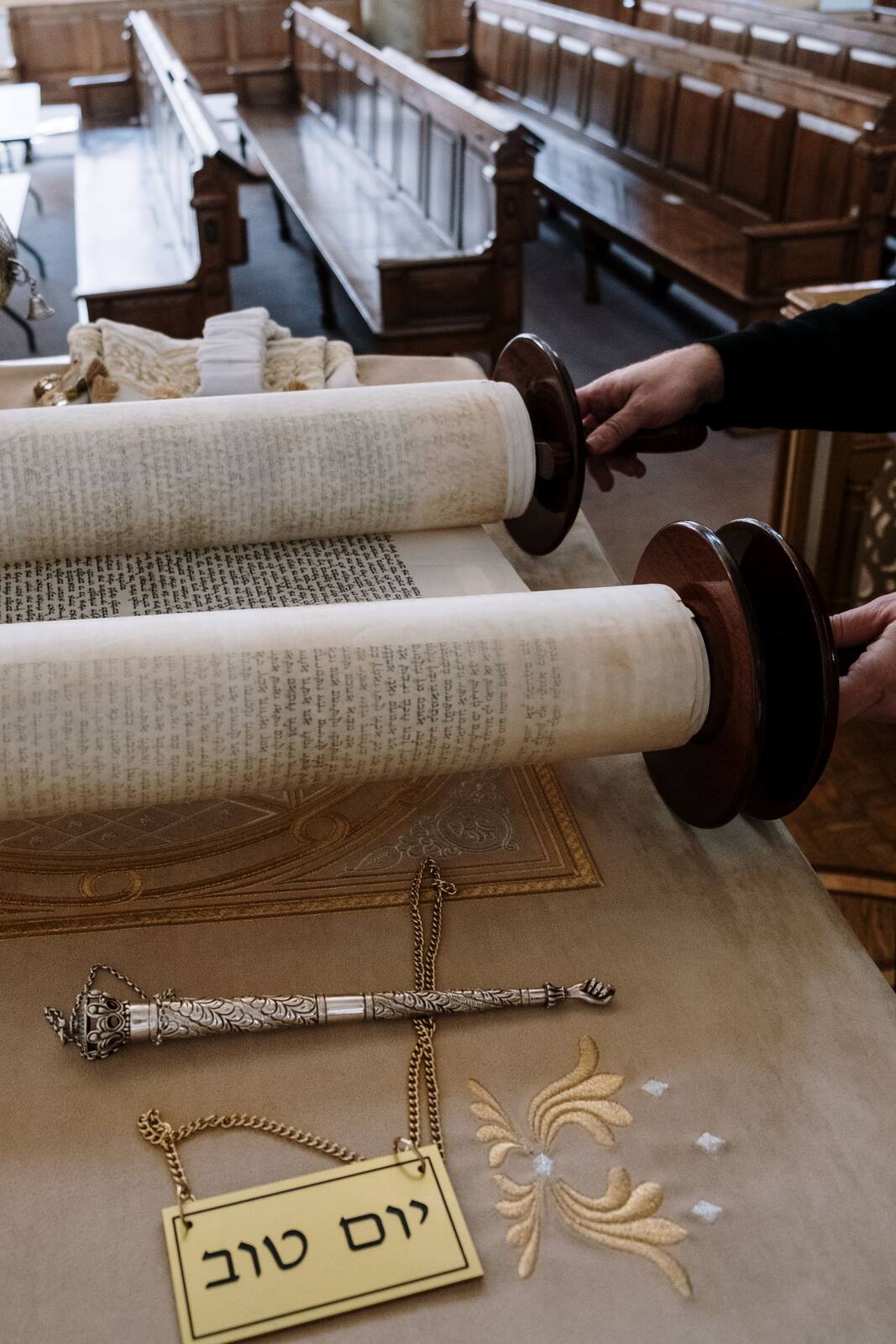
Many people read it from a printed book, each for themselves, without a blessing; in some communities it is read from a scroll with blessings.
What it teaches, simply
- G-d's love is personal. G-d is described as a lover who calls: "Arise, my beloved, my fair one, and come away, for the winter has passed." Passover is that call to leave the winter of exile.
- Love is a relationship that needs us to respond. The beloved at first is slow to open the door, which Jewish teaching sees as a picture of the soul and its longing.
- The unity of all. The Song says "I am my beloved's and my beloved is mine," a line often printed at Jewish weddings.
A few famous verses
- "Place me as a seal upon your heart... for love is as strong as death" (8:6).
- "Many waters cannot extinguish love" (8:7).
- "I am my beloved's, and my beloved is mine" (6:3).
The book is read only as a Jewish text, with the commentary of our Sages, and we ask the Rabbi for explanations of difficult verses.
In Lamorinda: Celebrate Passover with us in Lafayette. Call 925-384-7242 or see /forms/matzah and /events.
Common questions
What does the Song of Songs mean in Judaism?
In Judaism it is a parable of the love between G-d and the Jewish people. The Sages called it the "holy of holies" of Scripture.
Why is the Song of Songs read on Passover?
Because it alludes to the Exodus and the redemption, and because Passover is when G-d and Israel became bound in love, in the spring.
Who wrote the Song of Songs?
Jewish tradition attributes it to King Solomon.
When do Jews read the Song of Songs?
In some communities it is read after the Seder, and Ashkenazi communities read it on the Shabbat in the middle of Passover. See this week's schedule for the holiday dates.
Do you say a blessing before reading it?
Practice varies. Many read it without a blessing. Ask the Rabbi.
Where can I celebrate Passover in Lafayette, Moraga or Orinda?
Call Chabad of Lamorinda at 925-384-7242 to hear what is planned, or see events.
Take the next step
- Read about King Solomon, its author.
- Prepare for the Seder with the Passover Seder guide.
- Order matzah and Passover supplies: Order shmurah matzah and Seder kits.
Questions about this, or something on your mind? Message the Rabbi or the Rebbetzin privately, or call 925-384-7242. · Email
Read next
 King Solomon: The Wisest Man, the First Temple and His Three BooksWho was King Solomon? His request for wisdom, the two mothers, building the First Temple and the three books he wrote, with lessons for today.Read next →