
Learn › Kosher › Meat, dairy, wine and drinks: food by food
Pas Yisrael and Bishul Yisrael: Bread and Cooking by a Jew
What pas Yisrael and bishul Yisrael mean, and how a Jew can light the flame when a housekeeper cooks. Simple steps, and ask Chabad of Lamorinda.
Part 17 of 25 · Keeping kosher, step by step
On this page · 3 min read
What are pas Yisrael and bishul Yisrael?What does "pas Yisrael" mean on a label?Housekeepers and caregivers: who lights the flame?Making it easy at homePas Yisrael (פַּת יִשְׂרָאֵל) means bread baked with a Jew's participation, and bishul Yisrael (בִּשּׁוּל יִשְׂרָאֵל) means food cooked with a Jew's participation. Jewish law asks that a Jew take part, even by simply lighting the flame, in baking bread and cooking certain foods, so that these foods are not prepared entirely by a non-Jew. This is a separate layer from the basic kosher rules.
What are pas Yisrael and bishul Yisrael?
These two rules were instituted by our Sages. They also protect kashrut, since a non-Jew may not know the kosher rules. The rules have two parts:
- Pas Yisrael: bread and baked goods should be baked by a Jew, or with a Jew's help. Lighting the oven counts as help.
- Bishul Yisrael: certain foods cooked entirely by a non-Jew may not be eaten, even if all the ingredients and pots are kosher. This applies to foods that cannot be eaten raw, such as meat and grains, and that are fit for a royal table. Foods eaten raw, such as fruit or a carrot, are not affected.
What counts as "fit for a royal table" is a technical question, so ask the Rabbi about a specific food.
What does "pas Yisrael" mean on a label?
Many store-bought breads are kosher certified but are made in non-Jewish bakeries. This is called pas palter (פַּת פַּלְטֶר), commercial bread. A hechsher alone does not make bread pas Yisrael unless the package says so. Commercial bread is allowed in some cases, when the bakery is under kosher supervision and bread baked with a Jew's help is not available, and many people avoid it even so. Many are especially careful to avoid it between Rosh Hashanah and Yom Kippur. If bread is baked with dairy, ask the Rabbi.
Read kosher certification to see what a symbol on the package does and does not tell you.
Housekeepers and caregivers: who lights the flame?
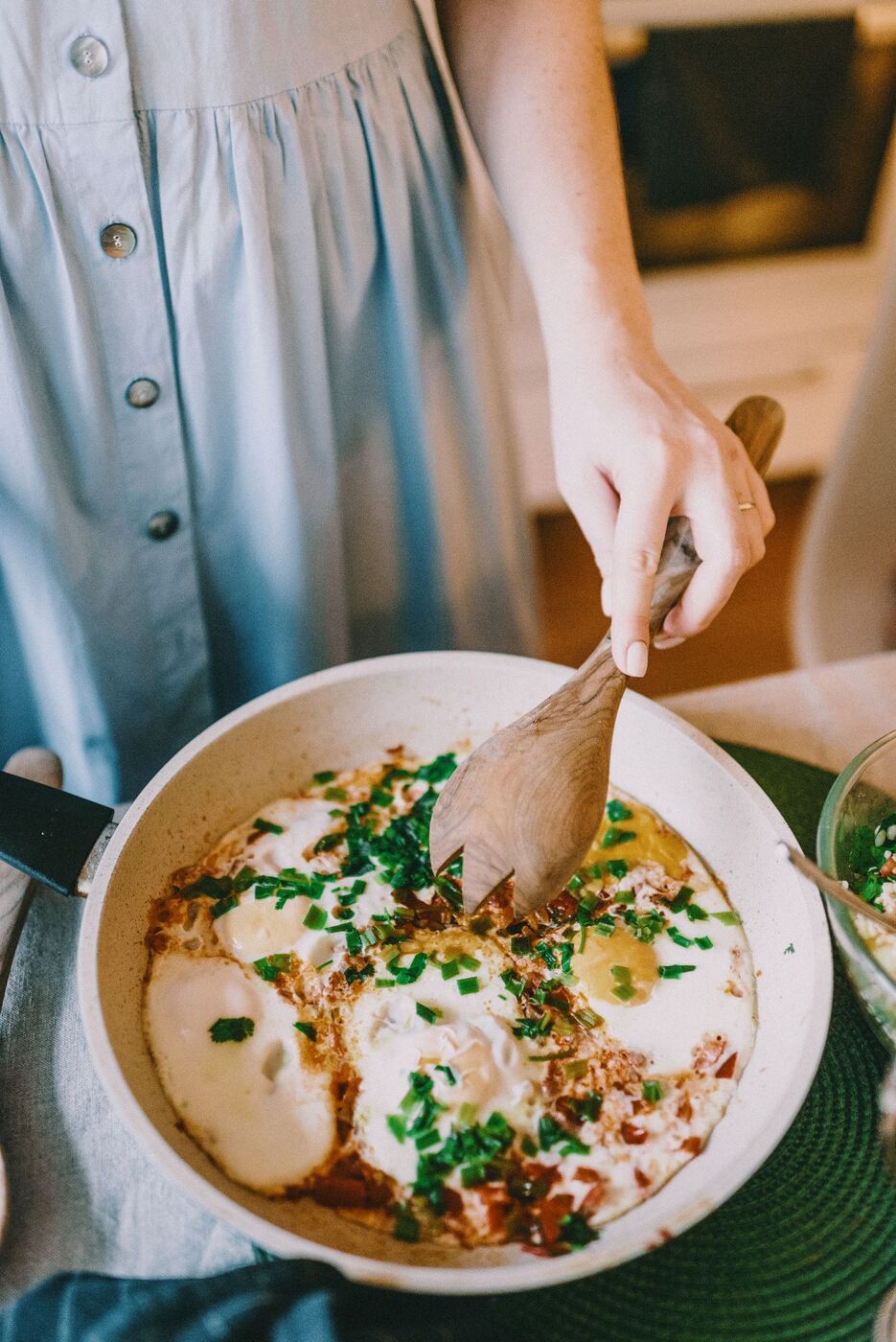
This comes up often in families with a caregiver, cleaner or cook, including many in Lafayette, Moraga and Orinda. If a non-Jew cooks in your kosher kitchen, the food may need a Jew to take part. The simple way to do that:
- A Jew lights the burner or turns on the oven (or turns up the flame), before the cooking begins.
- The non-Jewish helper then cooks. Under the Ashkenazi custom, this symbolic participation is enough.
- Sephardi custom is stricter: a Jew should actually place the food on the fire or stir it once it is cooking. If you follow Sephardi practice, ask the Rabbi.
A housekeeper also needs to know the basics, such as which pots and dishes are meat and which are dairy, so setting up a kosher kitchen with clear labels is the first step.
Making it easy at home
- Keep a routine: a Jew turns on the oven or stove for the day, or for each meal.
- Prepare meals that need no cooking, such as salads, with the helper.
- Leave short, labeled instructions in the kitchen.
- For a one-time event with a caterer, ask for kosher supervision. See eating out kosher.
In Lamorinda: A housekeeper or caregiver cooking in your kosher kitchen? Call Rabbi Labkowski at 925-384-7242 and we will walk you through it.
Common questions
What is pas Yisroel?
Pas Yisroel is bread baked by a Jew, or with a Jew's help, even if the Jew only lit the oven. It is kept in addition to the basic kosher rules.
What is bishul Yisrael?
Bishul Yisrael is food cooked with a Jew's participation. Certain foods cooked entirely by a non-Jew are not eaten.
Can a non-Jewish housekeeper cook in a kosher kitchen?
Yes, if a Jew turns on the flame first and the helper knows the kosher rules. Ask the Rabbi about your kitchen.
Do I need pas Yisrael if my bread has a hechsher?
A hechsher alone does not make bread pas Yisrael. Many people eat commercial bread under supervision when pas Yisrael is not available, and many keep to pas Yisrael whenever they can.
Is a food eaten raw affected?
No. Foods like fruit, salad and raw vegetables are not covered by bishul Yisrael.
Do Ashkenazim and Sephardim differ?
Yes. Ashkenazim rely on symbolic participation, such as lighting the fire, while the Sephardi custom asks that a Jew place the food on the fire. Ask the Rabbi which applies to you.
Take the next step
- Read the kosher kitchen to set up your kitchen so that anyone can help.
- Learn how to read a package in kosher certification.
- Call Rabbi Labkowski at 925-384-7242 to ask about your own household.
Step by step · Part 17 of 25
Keeping kosher, step by step
NextTevilat Kelim: How to Immerse New Dishes and UtensilsWhich new dishes and utensils need immersion in a mikvah, how to do tevilat kelim step by step, and the blessing to say.All 25 parts
- What Is Kosher? A Simple Guide to Jewish Dietary Laws
- Kosher Symbols: How to Read Kosher Labels and Hechshers
- Kosher Certification: How OU, OK, Star-K and Others Work
- Is It Kosher? Gelatin, Rennet, Carmine and Other Hidden Ingredients
- Meat and Milk in Jewish Law: How Long to Wait and Why
- What Does Pareve Mean? Neutral Foods in a Kosher Kitchen
- Is Vegan Food Kosher? Vegetarian and Plant-Based Eating and Kashrut
- How to Make Your Kitchen Kosher: A Step-by-Step Guide
- Kosher Oven and Microwave: Meat, Dairy, Covering and Kashering
- Kosher Meat: What Makes Meat and Poultry Kosher
- What Is Kosher Salt? Why It Is Called Kosher and Whether Regular Salt Is Kosher
- Kosher Fish: Fins and Scales, Is Shrimp Kosher, and Buying Fish
- Chalav Yisrael: What Cholov Yisroel Milk Means
- Is Cheese Kosher? Rennet, Supervision and Chalav Yisrael
- Kosher Wine: What Makes Wine Kosher and What Mevushal Means
- Are Beer, Whiskey and Liquor Kosher? A Simple Guide
- Pas Yisrael and Bishul Yisrael: Bread and Cooking by a Jew
- Tevilat Kelim: How to Immerse New Dishes and Utensils
- Checking Produce for Insects: A Kosher Guide
- Kosher Eggs: Blood Spots, Checking Eggs and Why Eggs Are Pareve
- Keeping Kosher on a Budget: Practical Tips That Work
- Keeping Kosher One Step at a Time: A Gentle Plan for Beginners
- Keeping Kosher When Your Family Doesn't
- Eating Out While Keeping Kosher
- Keeping Kosher When Traveling: Practical Tips
Questions about this, or something on your mind? Message the Rabbi or the Rebbetzin privately, or call 925-384-7242. · Email
Read next
 How to Make Your Kitchen Kosher: A Step-by-Step GuideHow to set up a kosher kitchen: separate meat and dairy, kashering your sink, oven and counters, toiveling dishes, and what can and cannot be koshered.Read next →