
Learn › Shabbat & holidays › The Chanukah story and its meaning
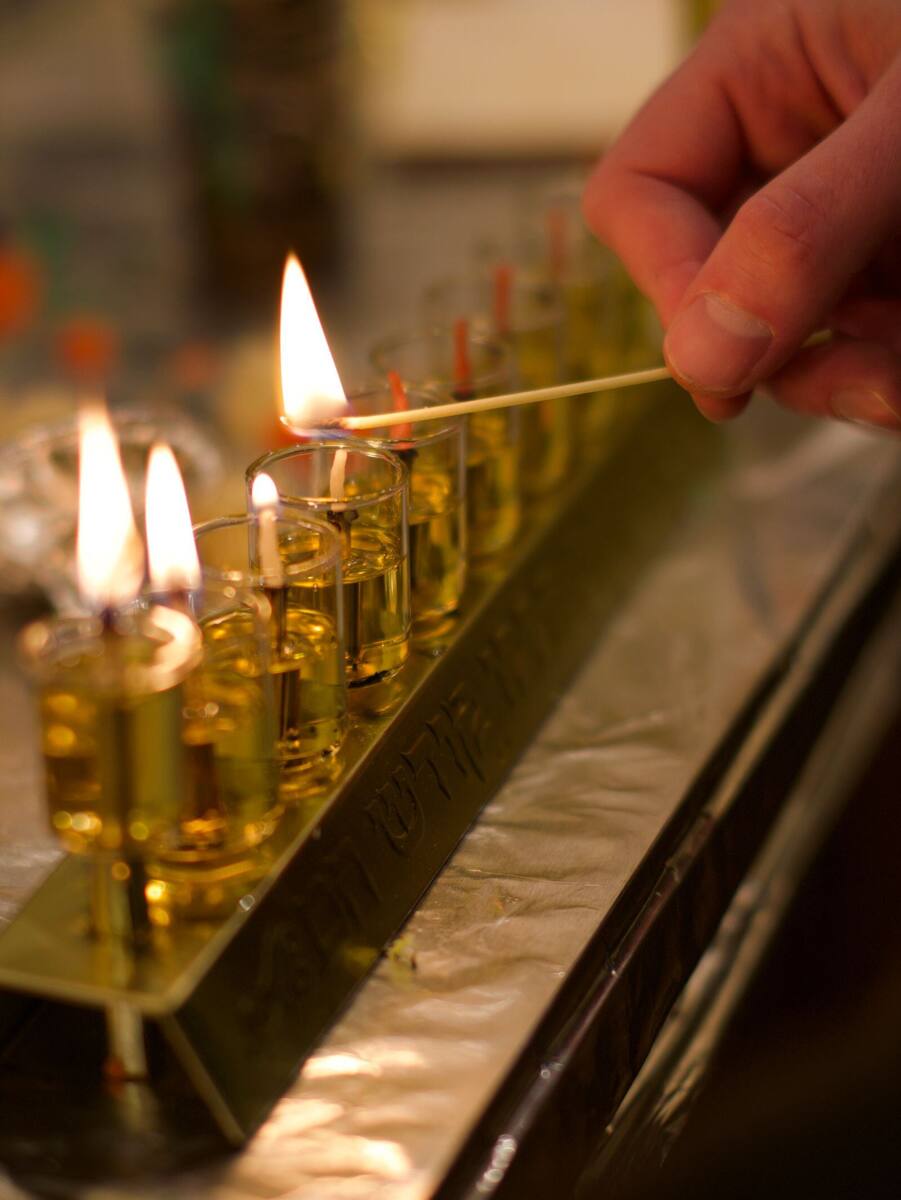
Menorahs in Dark Times: True Stories of Jews Lighting Chanukah Candles Against All Odds
True stories of Chanukah lights in a Soviet prison, in Bergen-Belsen and in a hospital room: how Jews found a way to light, and what it teaches us.
On this page · 3 min read
The onion menorah in a Soviet prisonA shoe, shoe polish and a rabbi's blessingA menorah in the hospitalWhat these stories teachJews have lit Chanukah lights in a Soviet prison, in a Nazi concentration camp and in a hospital room, using an onion, a shoe and a shelf. These true stories show that Chanukah's message, that a little light pushes away a lot of darkness, is not just a nice idea.
Here are three of them, retold in our own words. They are serious stories, and we tell them with respect.
The onion menorah in a Soviet prison
Reb Berke Chein, a respected Chabad chassid, spent years in a Soviet prison after trying to cross the border to freedom. When Chanukah came, he was in a sealed cell and worried. How could he get matches, wicks and oil? How could he hide them from the guards? Any forbidden object could bring a charge of treason.
A hardened Russian cellmate, not a Jew, noticed Reb Berke's distress and asked what he needed. When he heard, he promised to help. He cut an onion in half to serve as the menorah. He took a slab of butter from Reb Berke's own daily ration for the oil. He pulled threads from his threadbare uniform for wicks. And since there were no matches, he rubbed threads from another uniform quickly against the stone floor with the sole of his shoe, until they glowed and smoked, and used them to light the wicks. Reb Berke lit the little menorah in the dark cell. He later called it "my personal Chanukah miracle."
For the history of Jewish life in the Soviet Union, read Soviet Jewry.
A shoe, shoe polish and a rabbi's blessing
In the concentration camp of Bergen-Belsen, on the eve of Chanukah, there had been a cruel selection that morning. There was no oil, no candles, no menorah. Yet the prisoners found a way: a wooden clog served as the menorah, strings from a camp uniform as wicks, and black shoe polish as oil.
Rabbi Israel Spira, the Rebbe of Bluzhov, lit the light and recited the first two blessings. Before the third blessing, the one thanking G-d for keeping us alive and bringing us to this season, he stopped and looked around. Then he said it in a strong voice. Afterward a man challenged him: how could he thank G-d for survival while Jews were being murdered nearby? The rabbi said the question was fair and that he, too, had hesitated. But as he turned, he saw a large crowd of Jews standing with faith and concentration, and he realized that people with such faith left him no choice but to say the blessing. Years later the man sent him greetings, saying that the answer had stayed with him in hard times.
This account comes from the author Yaffa Eliach, who heard it from the rabbi's family. For more on how Jewish faith meets suffering, see Hope in Hard Times and Holocaust Remembrance.
A menorah in the hospital
Denise Berger writes about her father, who lay for months in an intensive care unit. The hospital rules did not allow candles, and, as she tells it, the blessings could not be said over an electric menorah. Her mother, who kept few Jewish observances, bought an electric menorah anyway and set it on a shelf across from his bed, where he and the nurses could see it through the window. Over the years that followed, she grew closer to Jewish life, and every Chanukah the lights appeared in her window.
If you or a loved one is in a hospital or care home at Chanukah, Jewish law has guidance for this situation. Please ask the Rabbi rather than guess. The Rabbi and Rebbetzin visit the sick at home, in hospital and in care facilities. See Shabbat in the Hospital and the page for help for seniors and families.
What these stories teach
- A mitzvah is worth effort. Each of these people found a way when it was hard.
- Small lights matter. In the darkest places, the smallest flame meant the most.
- No one has to light alone. In each story, someone helped: a cellmate, a crowd, a family.
In Lamorinda: If you or someone you love is ill or alone this Chanukah, call Rabbi Labkowski at 925-384-7242, or see /help/help-for-seniors-and-families.
Common questions
Is there a true story of lighting a menorah in a Soviet prison?
Yes. The story is told of Reb Berke Chein, who lit Chanukah lights in a Soviet cell using an onion, butter from his ration and threads for wicks, with the help of a cellmate.
Why do Jews light the menorah even in dangerous times?
Lighting is a mitzvah and a statement of Jewish identity, and in hard times it also gives hope. Our tradition teaches that a little light can drive away much darkness.
Can I use an electric menorah in a hospital?
Candles or oil are the traditional way. For a hospital, nursing home or any place where flames are not allowed, ask the Rabbi what to do.
Where can I read more true Chanukah stories?
For more stories, see our stories page, and the guide Chanukah for kids.
Does Chabad of Lamorinda visit people in the hospital at Chanukah?
The Rabbi and Rebbetzin visit the sick at home, in hospital and in care facilities. Call 925-384-7242 to ask about a visit.
How can I light the menorah if I am traveling or away from home?
Ask the Rabbi what to do. Our guide Chanukah away from home also covers this.
Take the next step
- Read the next guide, How the Rebbe's Menorah Campaign Began, to see how menorahs came out of the home and into the street.
- Know someone who is sick or alone? Call 925-384-7242 or see help for seniors and families.
- Light the candles together: see the menorah for tonight's order and blessings.
Questions about this, or something on your mind? Message the Rabbi or the Rebbetzin privately, or call 925-384-7242. · Email
Read next
 Chana and Her Seven Sons: The Chanukah-Era Story of a Mother's CourageThe story of Chana and her seven sons: a Jewish mother's faith in the days of the Greek decrees, told gently for families, with the lessons it teaches.Read next →