
Parashat Vaetchanan
Deuteronomy · Deuteronomy 3:23-7:11
Parashat Vaetchanan ואתחנן
Moses tells the people how he pleaded with G-d to let him enter the land, and how G-d refused but allowed him to see it from the top of the mountain. He urges Israel not to add to the commandments or take away from them, and to remember the day they stood at Sinai, when they heard G-d's voice but saw no image. He sets aside three cities of refuge east of the Jordan. Moses then repeats the Ten Commandments. He teaches the Shema: Hear, O Israel, G-d is our G-d, G-d is One. You shall love G-d your G-d with all your heart, with all your soul and with all your might. These words are to be on your heart, taught to your children, spoken of at home and on the way, bound as tefillin on the arm and head, and written on the doorposts as a mezuzah. Moses warns them not to forget G-d when they live in prosperity. This portion is read on Shabbat Nachamu, after Tisha B'Av.
A lesson for today
The Shema is the first prayer a Jewish child learns and the last words on a Jew's lips. The Rebbe encouraged that every child know the Shema by heart and say it every morning and every night before going to sleep. Its message is simple and powerful: G-d is One, present everywhere, and we are asked to love Him with everything we have. Saying the Shema each day, and placing a kosher mezuzah on our doors, brings that love and protection into our homes.
The Rebbe's teachingA storyIdeas for the Shabbat tableAn essay
The Rebbe's teaching
The Rebbe teaches that we should learn Torah the way a child learns, however much we know, because compared to G-d even the greatest scholar is a little child.
Our portion contains the Shema, the first prayer a Jewish child learns, and it is filled with mitzvot. The Rebbe points out how many are packed into those few verses, as the Sefer HaMitzvot counts them. The first line is the mitzvah to know that G-d is one. The next words command us to love G-d. Then comes the mitzvah to teach Torah to our children and to study it ourselves. Then the mitzvah to recite the Shema twice a day, then tefillin on the head and on the arm, and finally the mitzvah of the mezuzah on our doorposts.
Then the Rebbe asks a question. The verse about teaching speaks about children, "you shall teach them to your children." But adults must keep studying Torah long after their Bar Mitzvah. Why does the Torah mention children?
The Rebbe answers that the Torah is teaching us to learn the way children do. A person who understands Torah can become proud, feeling that his understanding is a great accomplishment. The more a person knows, the more he may begin to think about himself instead of G-d. But G-d does not want this. Compared to G-d, even the greatest Rabbi is like a little child. So whenever a grown person opens a Chumash or a page of Talmud, he should see himself as a young child. Even after he has learned a great deal, he must remember that the Torah belongs to G-d, and that he is like a small child being taught by his loving Father in Heaven.
What does this mean for us? It means that we are all beginners, and that this is a good thing. A beginner is curious, is not afraid to ask, and is ready to be surprised. Whether you are saying the Shema for the first time or the ten-thousandth time, you can say it as a child says it, with a simple trust that G-d is one and that He loves us. (Likkutei Sichos, vol. 19, p. 38.)
A story
In 1866, shortly before Rosh Hashanah, a modest chassid named Reb Pesach of Homil traveled to Lubavitch to spend the High Holidays with Rabbi Shmuel, the fourth Lubavitcher Rebbe. He was not a Torah scholar and had little formal education. He made a comfortable living buying goods in Homil and selling them to village shopkeepers.
In his private audience, Reb Pesach handed the Rebbe a note describing his circumstances, including how he earned his living. The Rebbe blessed him that he could always fulfill the words of the prophet, "Raise your eyes heavenward." Then he added: "Shema is Yisrael."
Reb Pesach did not understand. He went to Rabbi Mordechai-Yoel, who led the group, for an explanation. The rabbi said that synagogues have large windows so that people can look up at the sky, which stirs awe. Reb Pesach, who traveled a lot, could always look skyward. As for "Shema is Yisrael," the word Shema is formed from the first letters of the verse's first three words. When a person says the Shema with his whole being, he is raised from the level of Yaakov, serving G-d out of awe, to the level of Yisrael, serving out of love as well.
Years later, Reb Pesach told the young Yosef Yitzchak (the future sixth Rebbe), then eleven, that after that meeting he felt his soul light up. He began learning Torah with a neighbor, Hirshel the Watchmaker, and soon was reading Tanya and other classics. He said the Rebbe's words had "put me on my feet."
In 1928, around age ninety, he told the story again, with the same enthusiasm, to the sixth Rebbe. He said that he always chose lodgings with big windows, and that every time he said the Shema in prayer, he remembered the Rebbe's teaching. He hoped to be able to remember it at his last breath.
The sixth Rebbe concluded that Reb Pesach was one of the ordinary chassidim of his grandfather's time.
Ideas for the Shabbat table
- Ask the children: how many mitzvot can you find in the Shema? (Knowing G-d is one, loving G-d, learning Torah, saying the Shema, tefillin, mezuzah.)
- For everyone: what does it mean to say the Shema "with your whole being"? When do you feel that most?
- Ask: the Rebbe says even the greatest Rabbi is like a little child compared to G-d. Does that make you feel small, or relieved?
- For the children: what do you say before you go to sleep? Would you like to learn the Shema as a bedtime prayer? See the Shema.
- Discuss: Reb Pesach was an ordinary businessman, and one sentence changed his life. What is a sentence someone once said to you that you still remember?
- Activity: touch the mezuzah on a doorpost together and say what it reminds you of. See mezuzah.
- Read together about the Ten Commandments, which are repeated in this portion, and daily prayers.
An essay
Every adult has a secret wish to be good at something and a quiet fear of being a beginner. We like to show what we know. To walk into a room as a child, who does not know the words and has to ask, can be uncomfortable.
The Rebbe's teaching on this portion says that this discomfort is exactly what the Torah wants us to work through. Even a scholar, even someone who has learned for fifty years, should come to a page of Torah as a child comes to a father. This is not an insult to wisdom. It is an expression of the truth: whatever we know, G-d's wisdom is endlessly greater. And the beginner's heart is the one that can still be moved.
I think this is why the story of Reb Pesach is so touching. He was a businessman who had never studied much. One sentence from a Rebbe woke up his soul, and a few years later he was reading Tanya. Even at ninety, he told the story with the same excitement, and remembered it every time he said the Shema. That is a person who stayed a beginner, and who never lost the wonder.
The Shema is the perfect prayer for beginners. It is short. It is the first thing a child learns and, as Jewish tradition holds, the last words on a person's lips. And it asks for something simple: to know that G-d is one, to love Him, to teach our children, to place a mezuzah on our doors.
You do not need to be an expert to begin. You can start with a single morning of the Shema, or a single bedtime. If you would like to learn with others who are also beginners, you are warmly invited to a Shabbat at Chabad of Lamorinda in Lafayette (call 925-384-7242), or to the Wednesday 1:00 PM Tanya class at the Rabbi's home (call for the address).
Common questions
What is Parshat Vaetchanan about?
Parshat Vaetchanan (Deuteronomy 3:23-7:11) tells how Moses pleaded to enter the Land, reminds the people of Sinai, repeats the Ten Commandments, and teaches the Shema and the commandment to love G-d. It also tells the people to teach their children, and to place tefillin and a mezuzah.
What does the Rebbe teach about Parshat Vaetchanan?
The Rebbe teaches that the Shema holds many mitzvot, and that we should learn Torah like a child, with humility, because the Torah belongs to G-d. Compared to G-d, even the greatest scholar is like a small child being taught by his loving Father.
What is the main lesson of Parshat Vaetchanan?
The main lesson is that G-d is one, that we are asked to love Him with all we have, and that we pass this love to our children. Saying the Shema every day and putting a kosher mezuzah on our doors brings it into our homes. Read about the Shema and mezuzah, and find this week's portion on the parsha page.
Learn more
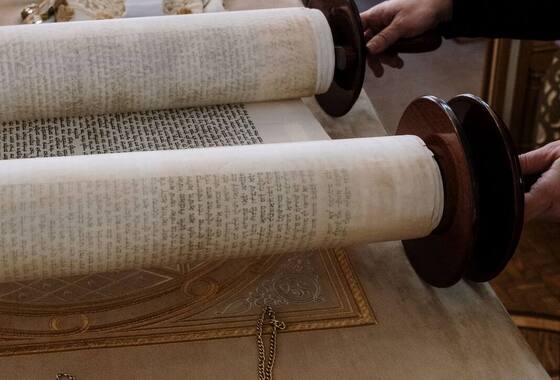 The Weekly Parsha: How the Torah Is Read Each WeekWhat the weekly Torah portion (parsha) is, how the 54 portions fit the Jewish year, and easy ways to study and discuss the parsha each week.
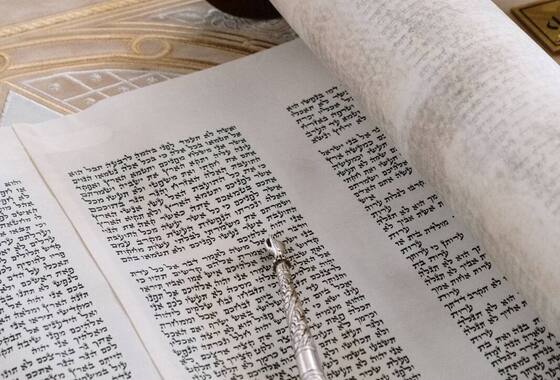 The Torah Reading in Synagogue: When, Why and HowWhen the Torah is read in synagogue, how the weekly cycle works, what happens during the reading, and what to do as it takes place.
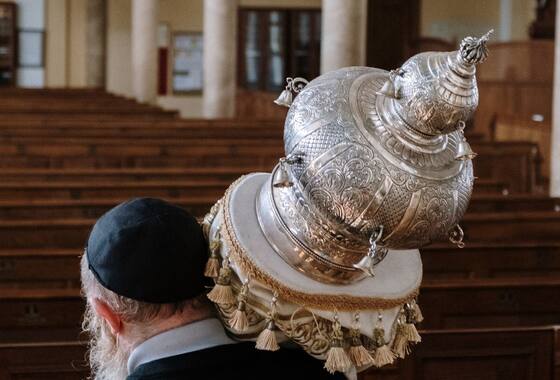 The Haftarah: What It Is and Why We Read ItWhat the Haftarah is, how it began, how it connects to the weekly Torah portion, who reads it, and what to know for a bar mitzvah.