

Parashat Noach
Genesis · Genesis 6:9-11:32
Parashat Noach נח
Noah is a righteous man in a generation filled with corruption and violence. G-d tells him to build an ark, because a great flood will cover the earth. Noah, his wife, his three sons and their wives enter the ark together with pairs of every kind of animal, and seven pairs of the pure animals. The rain falls for forty days, and the waters cover even the mountains. When the waters recede, the ark rests on the mountains of Ararat. Noah sends out a raven and then a dove, which returns with an olive leaf. Leaving the ark, Noah builds an altar, and G-d promises never again to destroy the world by flood, setting the rainbow as a sign of His covenant. G-d gives humanity laws, including the prohibition of murder. Later, people build a city and a tower to reach the heavens, and G-d confuses their language and scatters them. The portion ends with the generations leading to Abram.
A lesson for today
The Baal Shem Tov taught that the Hebrew word for ark, teivah, also means word. When the floodwaters of worry, pressure and distraction rise around us, we are told to enter the teivah, the words of Torah study and prayer. Inside these holy words we are protected, and like Noah we can bring along our whole household. The Rebbe added that the flood was also a purification of the world, and in the same way the challenges we face can refine us and leave us stronger.
The Rebbe's teachingA storyIdeas for the Shabbat tableAn essay
The Rebbe's teaching
The Rebbe teaches that Noah's year in the ark shows how much a life of caring for others, even in small and tiring tasks, matters to G-d.
Noah spent a full year inside the ark looking after an enormous number of animals. It was a year of feeding, cleaning and patience, with no audience and no applause. Why does the Torah describe the ark so carefully? The Rebbe points to a principle: "No person exists for himself." Human beings were created to serve, and the goal of creation is a world that becomes a dwelling place for G-d. If that is the goal, then every part of our surroundings deserves our attention, including the tasks that look minor.
The Rebbe also looks at Noah's name, which suggests calm and satisfaction. The Zohar says Noah was meant to spread that calm among people. Yet he built the ark and mostly kept to himself, explaining what he was doing only when people asked. The lesson the Rebbe draws is that a good person is not only a good example. A leader, a parent or a friend is also meant to bring others along and give their lives depth and meaning.
The Rebbe adds one more thought. Much of daily life is like the moon, which reflects light rather than producing it: work, shopping, errands, the ordinary material side of life. This side need not be spiritually empty. When we place it in the right context, doing it for a good purpose, it can carry light into places that otherwise lack it.
For us, the practical message is this. The dishes, the carpool, the unglamorous project at work and the patient care of someone who depends on us are not a break from holiness. They can be our ark, the place where we serve G-d and the world.
A story
In late August 2017, Hurricane Harvey brought five days of rain to Houston, Texas. Faygie Levy Holt reported how neighbors helped one another as the water rose.
In Bellaire, the floodwater outside the home of Rabbi Yossi Zaklikofsky and his wife Esty, who direct The Shul of Bellaire, had only just dropped to about half a foot when people began knocking on the door. Neighbors came to pull out ruined sheetrock and carpeting. People "from all backgrounds" offered their time, and many were strangers to the rabbi. One friend spent seven hours organizing the help, and word spread by a neighborhood group text.
In Sugar Land, Rabbi Mendel Feigenson watched a creek rise near his backyard. He and three of his children stayed on the second floor because the roads were flooded, while his wife Chaya was stuck in New York, since flights into Houston had stopped. He moved the Torah scrolls from the one-story Chabad House into his home. He said his neighbors were scared and worried and were encouraging one another.
Across the area, Chabad Houses matched families who lost their homes with hosts, set up kosher food and supply pantries, and organized volunteers. In the middle of a flood, people were building arks for one another.
Ideas for the Shabbat table
- Ask the children: if you had to take care of animals for a whole year, which job would be the hardest? Which would be the most fun?
- Noah worked quietly, with no audience. Can you think of a job at home that no one notices but that matters a lot?
- Share a time someone helped you when things felt like a flood, such as a move, an illness or a hard week. What did they do?
- The Hebrew word teivah means both "ark" and "word." What words could be an ark for us, such as a prayer, a blessing or a kind sentence?
- For adults: which small daily task could you do this week with a deeper purpose? Where could you help someone else "get into the ark"?
- Read about the Noahide laws together and talk about why the Torah says G-d wants a good world for everyone.
An essay
Most of life is not a flood. It is a Tuesday. It is the lunch to pack, the email to answer, the elderly parent to call, the animals, so to speak, that need feeding every day. Parshat Noach asks us to take those ordinary things seriously.
The Rebbe's teaching that no person exists for himself can sound heavy at first. But it is also a relief. If I exist only for myself, then every ordinary day has to prove that I am impressive. If I exist to serve, then the small tasks are the point. Feeding an animal, helping a neighbor, listening to a child with full attention: none of these needs to be dramatic to matter. A year in the ark is a year of small tasks, and the Torah treats it as one of the great chapters of our story.
There is also quiet wisdom in the Rebbe's observation about Noah's way of leading. Noah built, and he stayed busy, but he did not draw others in. The Rebbe teaches that goodness is meant to be shared. When our family is gentle, our table is open and our work is honest, we are not only keeping ourselves safe. We are showing others that there is a way to live that has depth and warmth.
And when a real flood comes, the lesson turns into action. In Houston, strangers carried out wet carpeting and hosts opened their homes. People who had never met became an ark for one another. That is the Rebbe's idea in practice: a world that becomes a dwelling for G-d, one small act of care at a time.
This Shabbat, you are welcome to be part of that kind of community. Come for Shabbat at Chabad of Lamorinda in Lafayette (call 925-384-7242), or join the Wednesday 1:00 PM Tanya class at the Rabbi's home (call for the address).
Common questions
What is Parshat Noach about?
Parshat Noach tells how G-d sends a flood to cleanse a corrupt world, how Noah builds an ark and saves his family and the animals, and how G-d makes a covenant with the rainbow as its sign. It ends with the Tower of Babel and the family of Abraham. See also Noah and the flood.
What does the Rebbe teach about Parshat Noach?
The Rebbe teaches that Noah's year of caring for the animals shows that no person exists for himself, and that every task, even a small one, helps make the world a dwelling for G-d. He also teaches that a good person should bring others along.
What is the main lesson of Parshat Noach?
The main lesson is to find shelter in what is holy, and to care for others even when the work is humble. Chassidic teaching notes that the Hebrew word for ark, teivah, also means "word," so prayer and Torah can be our ark when worries rise. For more, see trust and worry.
Learn more
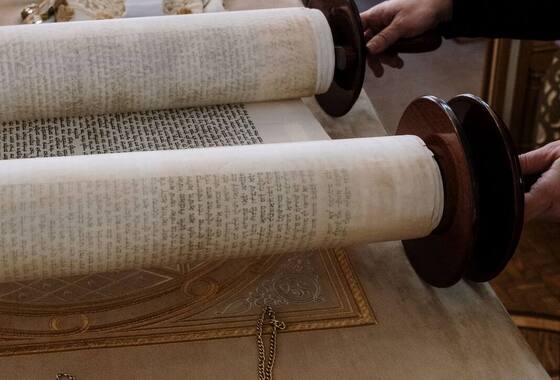 The Weekly Parsha: How the Torah Is Read Each WeekWhat the weekly Torah portion (parsha) is, how the 54 portions fit the Jewish year, and easy ways to study and discuss the parsha each week.
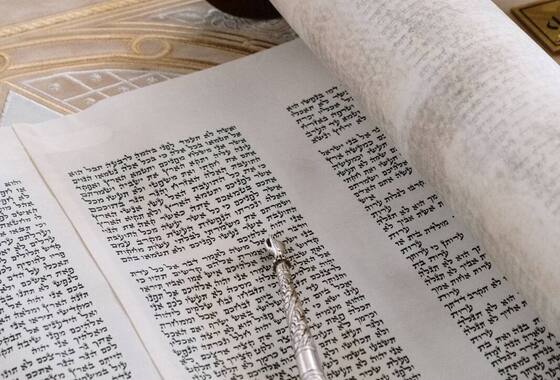 The Torah Reading in Synagogue: When, Why and HowWhen the Torah is read in synagogue, how the weekly cycle works, what happens during the reading, and what to do as it takes place.
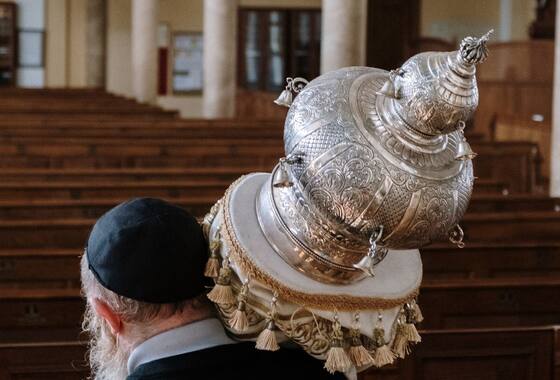 The Haftarah: What It Is and Why We Read ItWhat the Haftarah is, how it began, how it connects to the weekly Torah portion, who reads it, and what to know for a bar mitzvah.