

Parashat Nasso
Numbers · Numbers 4:21-7:89
Parashat Nasso נשא
The census of the Levites continues with the families of Gershon and Merari and their duties in carrying the Tabernacle. The Torah teaches that one who wrongs another and then admits it must confess, repay the amount plus one fifth, and bring an offering. It describes the procedure for a wife suspected of unfaithfulness, the sotah. It gives the laws of the nazir, who vows to abstain from wine and grape products, not to cut his hair, and not to become impure through contact with the dead. G-d then gives the priests the Priestly Blessing: May G-d bless you and guard you; may G-d shine His face upon you and be gracious to you; may G-d lift His face toward you and grant you peace. When the Tabernacle is completed, the leaders of the tribes bring wagons to carry it, and over twelve days each of the twelve leaders brings an offering for the dedication of the altar. The offerings are identical, yet the Torah describes each one in full.
A lesson for today
The twelve leaders brought exactly the same offerings, yet the Torah repeats every detail twelve times. Our Sages explain that each leader brought his gift with his own unique intention, reflecting his own tribe. The Rebbe taught that even when many people do the same mitzvah, each one is precious and unique in G-d's eyes. Your Shabbat candles, your prayer, your act of kindness may look like everyone else's, but no one else in the world can bring exactly what you bring.
The Rebbe's teachingA storyIdeas for the Shabbat tableAn essay
The Rebbe's teaching
Even when a person has strayed, the distance is only temporary, and the way back is always open. Parshat Nasso includes the laws of the sotah, a wife suspected of unfaithfulness. The Rebbe starts with a question from the Talmud. The Sages teach that a person does not commit a transgression unless "a spirit of folly" enters him, and they find this idea in the verse about the sotah: "If any man's wife goes astray." But why use the most serious wrongdoing to show that even small sins are irrational? With a small sin, folly is much harder to see.
The Rebbe explains that this case is a model for every sin. First, the Jewish people stand toward G-d in a bond like a marriage, formed at Sinai. Any wrongdoing, even a small one, betrays that bond. This is why every sin is, at its root, foolish: it acts against what we most deeply are.
Second, the Torah's picture is hopeful. The suspicion on the wife is temporary. If she is found innocent, she returns to her husband, and the Torah even says she will be blessed with children. In the same way, the distance that a sin creates is only a passing moment. G-d says, "I will not give My glory to another," meaning that a Jew belongs to Him and no one else.
What it means for us: after a mistake, a person must not fall into despair, even if he feels abandoned. Return is always possible, and it can be fruitful. Like the wife who is cleared, the one who returns can grow in love and awe, and reach a closeness that is deeper than before.
A story
A well-known story; its details cannot be confirmed. In a small town there were only a few Jewish families, with exactly ten adult men between them. They were devoted and never missed a minyan, the ten-man quorum needed for communal prayer, because each of them knew that without him there would be none.
Then a new Jewish family moved into town, and the number rose to eleven. Everyone was glad. And then something strange happened: from that day on, the community could never put together a minyan. When there were exactly ten, each person knew he was needed. With eleven, each one quietly assumed the others would manage without him.
The story is told by Rabbi Yossy Goldman in a short talk on the opening of the Book of Numbers. His point is that people who know they are indispensable show up. He also points out that a missing letter makes a Torah scroll unfit, and that nine great rabbis cannot make a minyan, but one boy of thirteen completes it.
Ideas for the Shabbat table
- Ask: when did you feel that something would not have been the same without you?
- For children: the twelve leaders each brought exactly the same gift. Why do you think the Torah describes each one separately? What is something only you can bring to our family?
- Discuss: if a person makes a mistake, how do we welcome them back without making them feel small?
- Ask the adults: is there someone we have written off who may be waiting to be invited?
- Talk about the minyan story: are there places in our life where we assume "the others will manage"?
- Read about teshuvah, the Priestly Blessing and why community matters.
An essay
Nasso is a long portion with a strange mixture of laws: the Levites' duties in carrying the Tabernacle, the sotah, the nazir who takes on extra restrictions, the Priestly Blessing, and finally twelve days of offerings from the twelve leaders, described in the same words twelve times. It can look like a collection of unconnected pieces. But there is a thread.
The thread is that every person counts, including the one who has stumbled. The Rebbe's teaching on the sotah is not about shame. It is about hope: no matter how far someone feels, the relationship is not lost, and a return can be fruitful. The twelve identical gifts say something similar. They are the same, and yet each one is described as if it were new. Each person's version of a familiar mitzvah is unique.
It is easy to believe that our small acts are interchangeable: one more candle on Friday night, one more prayer, one more dollar to charity. Nasso says they are not. And it is easy to believe that a mistake has disqualified us. The Rebbe says it has not.
In daily life, this means two things. When someone comes back to the community after a long time, or after a conflict, the most important thing we can say is "We are glad you're here." And when we are the ones standing at a distance, we should remember that the door is open, and that our presence is needed.
The story of the minyan makes the same point in a lighter way. When we know we are needed, we show up.
This week, tell someone, "I'm glad you're here." Then come to a Shabbat at Chabad of Lamorinda in Lafayette (call 925-384-7242), or join the Wednesday 1:00 PM Tanya class at the Rabbi's home (call for the address).
Common questions
What is Parshat Nasso about?
Parshat Nasso (Numbers 4:21-7:89) continues the census of the Levites and describes their duties, the law of restitution, the sotah, the nazir, the Priestly Blessing and the offerings of the twelve leaders at the dedication of the Tabernacle. It is the longest portion in the Torah.
What does the Rebbe teach about Parshat Nasso?
The Rebbe teaches that the sotah shows how every sin, even a small one, is a betrayal of our bond with G-d, but that the distance it creates is temporary and no Jew is ever beyond return. He teaches that return can lead to even greater closeness.
What is the Priestly Blessing?
It is the blessing the kohanim give the people, taught in this portion. Read more in our guide to the Priestly Blessing and see this week's parsha.
Learn more
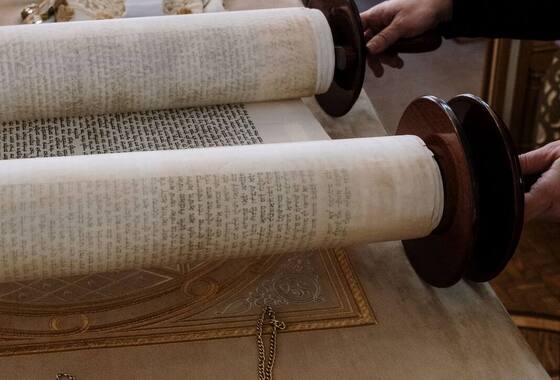 The Weekly Parsha: How the Torah Is Read Each WeekWhat the weekly Torah portion (parsha) is, how the 54 portions fit the Jewish year, and easy ways to study and discuss the parsha each week.
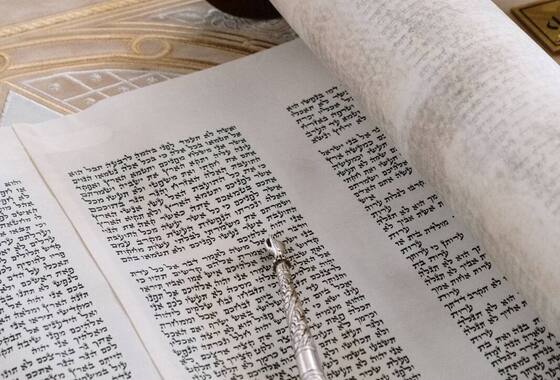 The Torah Reading in Synagogue: When, Why and HowWhen the Torah is read in synagogue, how the weekly cycle works, what happens during the reading, and what to do as it takes place.
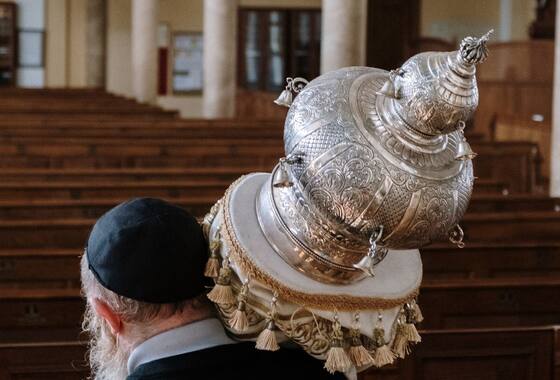 The Haftarah: What It Is and Why We Read ItWhat the Haftarah is, how it began, how it connects to the weekly Torah portion, who reads it, and what to know for a bar mitzvah.