

Parashat Miketz
Genesis · Genesis 41:1-44:17
Parashat Miketz מקץ
Pharaoh dreams of seven fat cows swallowed by seven lean cows, and seven full ears of grain swallowed by seven thin ears. No one can interpret the dreams until the butler remembers Joseph. Brought from prison, Joseph tells Pharaoh that the interpretation is not his own; G-d will answer. Seven years of plenty will be followed by seven years of famine, and Joseph advises storing grain during the good years. Pharaoh appoints Joseph second only to himself. Joseph marries Asenath and has two sons, Manasseh and Ephraim. When the famine comes, Joseph's brothers arrive to buy food. Joseph recognizes them, but they do not recognize him. He accuses them of being spies, holds Simeon, and demands they bring their youngest brother Benjamin. Jacob reluctantly lets Benjamin go after Judah takes responsibility for him. Joseph hosts the brothers, then has his silver goblet hidden in Benjamin's sack, and declares that Benjamin will remain as his servant.
A lesson for today
Standing before the most powerful ruler in the world, with his freedom at stake, Joseph said: it is not me; G-d will answer. He did not take credit for his gift. The Rebbe taught that true humility is not thinking little of our talents but knowing where they come from. Recognizing that our abilities are gifts from G-d frees us to use them fully and confidently, and to use them for the good of others, as Joseph did in feeding an entire region through the famine.
The Rebbe's teachingA storyIdeas for the Shabbat tableAn essay
The Rebbe's teaching
The Rebbe teaches that real teshuvah, returning to what is right, begins with a free choice: I did this, and I choose to change.
The Rebbe starts with a puzzle. After years of silence, Joseph's brothers finally admit their guilt for selling him. At that very moment Reuven says, "Didn't I tell you not to wrong the boy? And now his blood is being demanded." Why would Reuven add to their pain when they are already full of remorse?
The Rebbe explains that the brothers' words were more than an acceptance of suffering. They were an act of teshuvah, and Reuven, who had first opened that path, was showing what genuine teshuvah needs. He points to Maimonides, who places the laws of free choice within the laws of teshuvah. Two things follow. First, remorse that is pushed on us by hardship is real, but it is not yet a choice. Suffering humbles a person, yet it does not prove he has decided to return, and a change driven only by outside pressure may fade when the pressure ends. Second, true teshuvah means seeing clearly that my own decision led to the wrong, even when my surroundings played a part, because I always had the strength to say no. Reuven reminded the brothers that what they did was deliberate, and that it had to be faced for its own sake, not only because of the trouble it had brought them.
The Rebbe adds a hopeful note. Free choice comes from a very deep place in the soul, and teshuvah is where it shines most: even a person who feels far away can choose to come close again. The Rebbe connects this to Chanukah, the festival of light that comes out of darkness.
What it means for us: do not wait for a crisis, and do not stop at being sorry about the consequences. Ask honestly, "Did I choose this?" and then choose differently, because you want to.
A story
A well-known true account comes from S. B. Unsdorfer, a Holocaust survivor who later settled in London and told it in his memoir, The Yellow Star. In December 1944 he was a prisoner at Nieder-Orschel, a slave labor subcamp of Buchenwald. About fifteen men prayed together between the bunks each morning and evening. They were starving, frozen and beaten down, and Unsdorfer wanted to mark Chanukah to lift their spirits.
The men drew lots for tasks. One persuaded a hostile foreman that their machine needed regular oiling, so a small can of machine oil was allowed in the toolbox. Unsdorfer poured it into half of a shoe-polish tin and made a wick from threads of his thin blanket. They had no matches. The table elder told his tablemates to leave part of their soup, and the soup was traded for a cigarette. The cigarette bought a loan of a box of matches from the camp cook, who asked no questions.
On the first night of Chanukah, Unsdorfer lit the little lamp under his bunk and said the blessings. Other prisoners gathered quietly, sang the old songs and remembered their homes. Then a guard came in, sniffed and began searching the bunks, shouting, "It stinks of oil in here."
At that moment the air-raid sirens sounded and the camp lights went out. The prisoners had to run to the roll-call ground. Unsdorfer put out the flame with his shoe and carried his menorah outside. Under the drone of bombers he said the blessings again, thanking G-d for the rescue.
Those men chose to bring a little light into a very dark place, when no one was making them.
Ideas for the Shabbat table
- Ask everyone: what is one thing you did this week that you chose, and one thing you did "because everyone does"? How do they feel different?
- Discuss: why might a change that comes from our own decision last longer than one that comes from being pushed?
- For children: if you said sorry only because you got in trouble, is it the same as a sorry from the heart? How can we tell?
- Talk about Reuven: is it ever kind to tell someone a hard truth at a sad moment? How would you do it gently?
- Adults: is there a small habit you could take on this week just because you want to, with no one asking?
- Light a candle at the table and ask, "Where could one small light help right now?"
An essay
Most of us know what it is like to be corrected. A parent, a boss or a friend tells us what we did wrong, and we nod and promise to do better. Sometimes we really mean it. Often the promise fades within days, once the pressure is gone.
The Rebbe's teaching on Miketz explains why. When change comes only from outside, from fear, embarrassment or consequences, it lasts only as long as the outside force does. Reuven wanted his brothers to reach something deeper, a decision that was truly theirs. It is a gentle but demanding idea: no one can do teshuvah for us, and no one can take it away.
This is good news. If I know that the strength to choose rightly was always in me, then I am not a prisoner of my habits, my upbringing or my mistakes. The Rebbe teaches that the power of free choice reaches the deepest part of the soul. That means a person who feels far from Jewish life, from a friend, or from his own best self can still take one real step back.
It also asks something of us as friends, parents and teachers. Punishment and pressure may stop a behavior, but they do not create a decision. What helps is an honest, kind conversation that points a person to his own choice, the way Reuven did, and then lets him make it.
For ourselves, the practice is simple. At the end of a day, take two quiet minutes. Ask, "Where did I do something I am not proud of, and what part of it was my choice?" Not to feel guilty, but to see clearly. Then pick one small thing to do differently tomorrow, and do it because you want to. The Rebbe links this to the lights of Chanukah, which shine brightest where the night is darkest.
If you would like to spend a Shabbat in a warm community, you are welcome at Chabad of Lamorinda in Lafayette. Call 925-384-7242, or ask about the Wednesday 1:00 PM Tanya class at the Rabbi's home (call for the address).
Common questions
What is Parshat Miketz about?
Parshat Miketz (Genesis 41:1-44:17) tells how Joseph interprets Pharaoh's dreams, is made ruler over Egypt's food, and meets his brothers when they come to buy grain. It ends with the silver goblet found in Benjamin's sack. You can read more about the story in Joseph and his brothers.
What does the Rebbe teach about Parshat Miketz?
The Rebbe teaches that true teshuvah comes from a free choice and not from outside pressure, and that we must honestly see that our own decision led to the wrong. Read more in our guide to teshuvah.
What is the main lesson of Parshat Miketz?
The main lesson is that we always have the power to choose, and that growth we choose ourselves is the kind that lasts. Find this week's portion and more on the parsha page, or see this week's Shabbat times and events.
Learn more
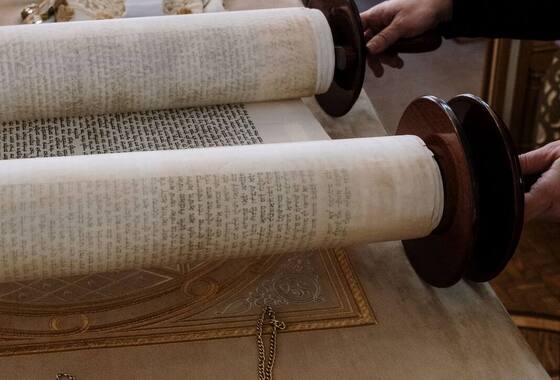 The Weekly Parsha: How the Torah Is Read Each WeekWhat the weekly Torah portion (parsha) is, how the 54 portions fit the Jewish year, and easy ways to study and discuss the parsha each week.
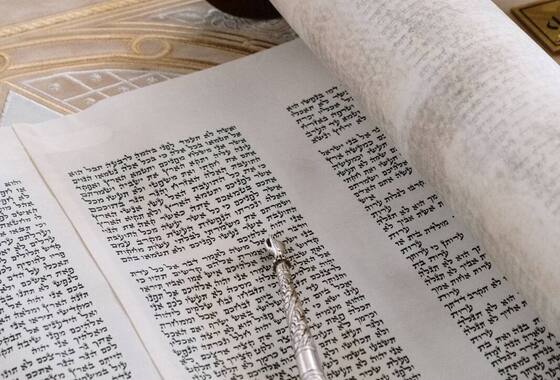 The Torah Reading in Synagogue: When, Why and HowWhen the Torah is read in synagogue, how the weekly cycle works, what happens during the reading, and what to do as it takes place.
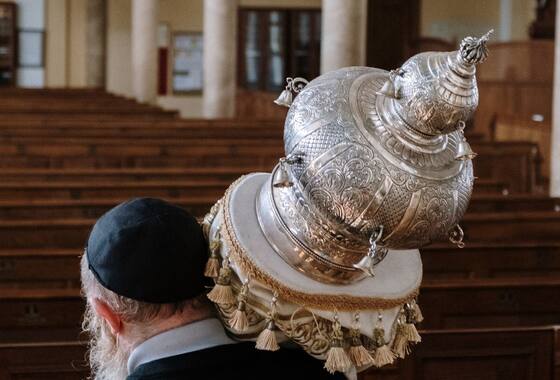 The Haftarah: What It Is and Why We Read ItWhat the Haftarah is, how it began, how it connects to the weekly Torah portion, who reads it, and what to know for a bar mitzvah.