

Parashat Beshalach
Exodus · Exodus 13:17-17:16
Parashat Beshalach בשלח
G-d leads the people by a roundabout route through the desert, going before them in a pillar of cloud by day and a pillar of fire by night. Moses takes Joseph's bones with him. Pharaoh changes his mind and chases them with his chariots, trapping them at the sea. The people cry out, and G-d tells Moses: Why do you cry to Me? Tell the children of Israel to go forward. Moses raises his staff, the sea splits, and Israel walks through on dry land, while the waters return and cover the Egyptian army. Moses and the people sing the Song of the Sea, and Miriam leads the women with drums and dancing. At Marah, bitter water is made sweet. When the people complain of hunger, G-d sends quail and the manna, a double portion on Friday and none on Shabbat. At Rephidim, water flows from a rock. Amalek attacks, and Joshua defeats them while Moses holds up his hands.
A lesson for today
Trapped between the sea and the Egyptian army, the people did not know what to do. G-d's answer was simple: go forward. The Rebbe often taught that when we face an obstacle that seems impossible, we should not wait for the sea to split first. We take the next step in doing what is right, with trust in G-d, and the way opens before us. Many challenges shrink once we begin moving toward them with faith.
The Rebbe's teachingA storyIdeas for the Shabbat tableAn essay
The Rebbe's teaching
The Rebbe teaches that the manna, the bread that fell from heaven each day, shows us how to live with trust: to work honestly and use natural means, and still to see every success as a gift from G-d.
The Rebbe begins with a custom in Jewish law. The Alter Rebbe, the first Chabad Rebbe, in his Shulchan Aruch advises reciting the passage about the manna every day. In the first edition he gives the reason, following earlier authorities, that it strengthens emunah, faith, that our livelihood comes from G-d's providence. In his revised edition, he gives a different reason: that it arouses bitachon, trust, in G-d who provides each day's food. Why did he change the reason?
The Rebbe explains the difference. Faith is a steady conviction that stays in the background, even when nothing tests it. Trust is awakened by need. It means relying on G-d with certainty that He will bring a good that is clearly good, and it is most alive when we are working for a living or facing hardship. In the revised edition the Alter Rebbe follows the Kabbalists, who include a higher kind of trust, the trust of "those who long for His kindness," which can be expressed daily, even on Shabbat.
To show this higher level, the Rebbe cites the Zohar about Rabbi Yeisa the Elder, who would not prepare his meal until he had asked G-d for his food. He said, "A meal should not be prepared until it has been given by the King." Even food already in his house, he saw as a gift received anew from G-d at that moment.
What it means for us: on weekdays, do honest business and use every natural means, while recognizing that each success is a gift. And at moments of prayer and on Shabbat, try to reach for the higher trust, asking for what we need without anxious self-centeredness. The Rebbe notes that few can reach Rabbi Yeisa's level fully, but everyone can reach it in part, at certain times.
A story
Mendel Greenbaum (1929-2015), a plumber who lived in Miami, told this story in a 2011 interview. Before he was drafted into the United States Army during the Korean War, he visited the Rebbe, Rabbi Menachem Mendel Schneerson, who had only recently become the leader of Chabad. Mendel was worried that army life would pull him far from Torah. He was nervous in the Rebbe's presence and did not fully understand the answer at first.
The Rebbe gave him a simple image. "Sometimes in life you have to go back, so that you can go forward in the future." He walked around his desk and stood in front of a chair beside Mendel. Someone standing right in front of a chair cannot jump over it, he said, but if he steps back and takes a run, the leap is easy. Then the Rebbe pointed out the good Mendel could do in the army, by influencing other Jewish soldiers toward Torah.
Mendel was stationed at Fort Pickett in Virginia, and was in the end sent to Europe and not to Korea. He began writing to the Rebbe, who answered with encouragement, a booklet for soldiers, and reminders about tefillin and Psalm 23. Each letter included materials for Purim, Passover or Chanukah to share with fellow soldiers. When Mendel apologized for losing some coins the Rebbe had given him, the Rebbe sent another quarter and told him not to worry.
When Mendel was transferred to Munich, the Rebbe asked him to visit Rabbi Snieg, a rabbi in Munich. After Mendel reported that he had gone, the Rebbe answered that he had been wondering about his long silence. Mendel took this as proof that the Rebbe truly cared about him and every Jewish soldier.
Looking back, Mendel saw that his time away from home had given him the chance to draw others closer to Torah, just as the Rebbe had said.
Ideas for the Shabbat table
- Ask: what is the difference between believing in G-d and trusting G-d? Which one is more active?
- Talk about the manna: it came fresh each day and could not be saved. How would our lives change if we saw each day's food as a gift received today?
- For children: the Rebbe said you can leap over a chair by stepping back first. What is something you could do better if you "stepped back" first?
- Discuss: on weekdays we work for a living, and on Shabbat we rest and trust. What does each teach us?
- Ask: when did a situation that looked like a step backward turn into a step forward?
- Adults: where could an unfamiliar place or a new situation become a chance to influence someone for good?
An essay
Standing at the edge of the sea, with an army behind them, the Israelites had no plan. Later in the same portion, in the desert, they had no food and no plan again. And in each case, G-d asked them for something unfamiliar: to move forward, and to gather only enough bread for one day.
The Rebbe's teaching on the manna is gentle and practical. The manna came each morning, and anyone who tried to keep extra found it spoiled. It was a daily lesson in trust. Each day's food was a gift received that day.
The Rebbe teaches that this trust has two sides. On ordinary days, we are expected to work: to make honest business decisions, to prepare, to show up. That is how G-d wants the world to run. But inside the work there is a second thing, an awareness that the result is a gift, not a guarantee we earned. On Shabbat and at moments of prayer we get a taste of a higher trust, a relaxed asking without anxious grasping.
This is a balanced way to live, and it is deeply relieving. We do not have to carry the whole world on our shoulders. Our job is to do our part honestly and with energy. The rest is not in our hands.
The story shows another side of this. When Mendel was frightened of being sent far from home, the Rebbe did not tell him to be afraid or to refuse. He reframed it: a step back can be preparation for a leap, and the place you are afraid to go may be where you can do the most good. That is a form of trust too.
For families in Lafayette, Moraga and Orinda, a Shabbat meal is a weekly practice of this trust: we set down our work and receive. You are welcome to join us at Chabad of Lamorinda in Lafayette (call 925-384-7242), or to the Wednesday 1:00 PM Tanya class at the Rabbi's home (call for the address).
Common questions
What is Parshat Beshalach about?
Parshat Beshalach (Exodus 13:17-17:16) tells how the Israelites leave Egypt, the sea splits, they sing the Song of the Sea, the manna falls from heaven, water comes from a rock, and Amalek attacks. See Shabbat Shirah and the Exodus story.
What does the Rebbe teach about the manna in Parshat Beshalach?
The Rebbe teaches that the manna is a lesson in daily trust (bitachon): work honestly and use natural means, yet see every success as a gift from G-d each day. Read more in bitachon.
What is the main lesson of Parshat Beshalach?
The main lesson is to keep moving forward with trust, taking the next step and trusting G-d with the rest. Our guide on Tanya on worry and trust goes deeper, and you can find this week's portion on the parsha page.
Learn more
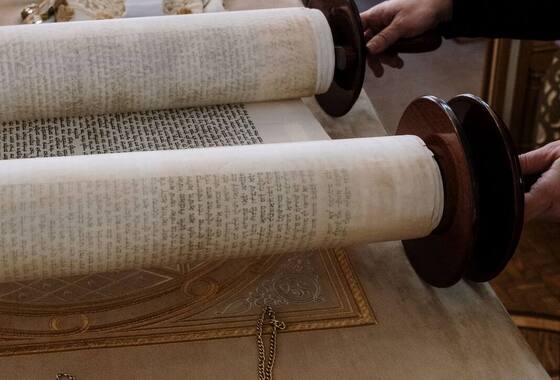 The Weekly Parsha: How the Torah Is Read Each WeekWhat the weekly Torah portion (parsha) is, how the 54 portions fit the Jewish year, and easy ways to study and discuss the parsha each week.
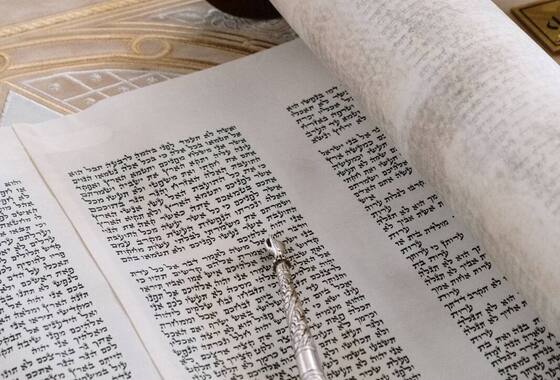 The Torah Reading in Synagogue: When, Why and HowWhen the Torah is read in synagogue, how the weekly cycle works, what happens during the reading, and what to do as it takes place.
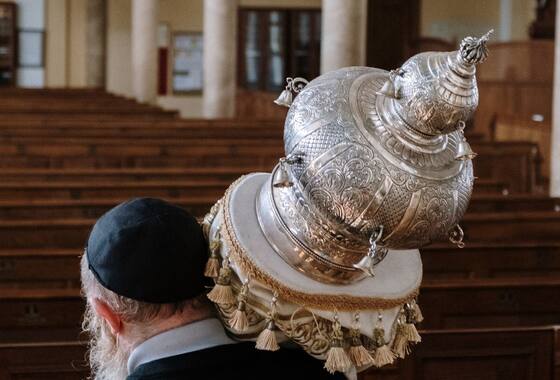 The Haftarah: What It Is and Why We Read ItWhat the Haftarah is, how it began, how it connects to the weekly Torah portion, who reads it, and what to know for a bar mitzvah.