
Learn › Prayer & Torah › The Torah, the Tanach and the weekly parsha
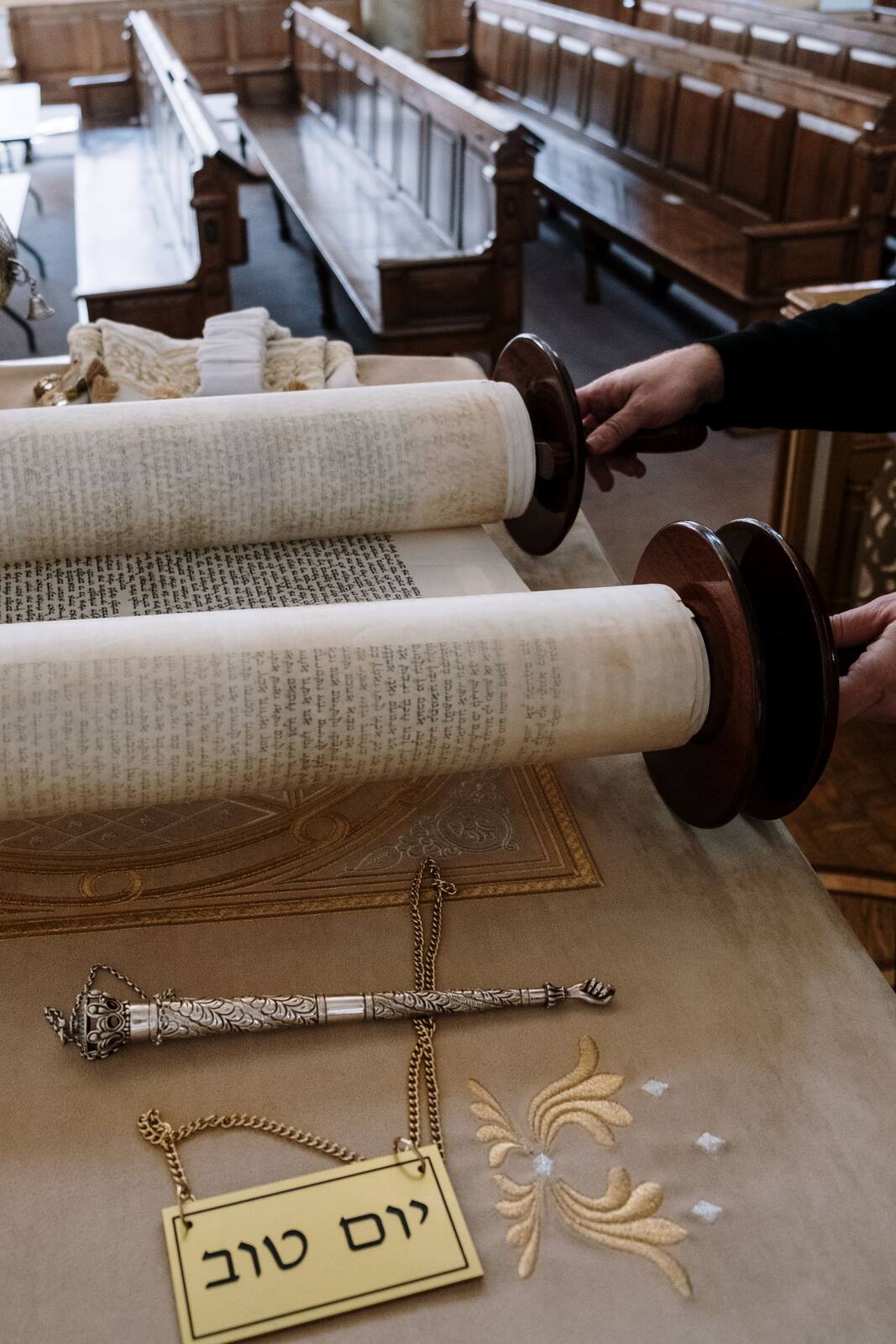
The Torah Reading in Synagogue: When, Why and How
When the Torah is read in synagogue, how the weekly cycle works, what happens during the reading, and what to do as it takes place.
On this page · 2 min read
Why we read the Torah publiclyThe yearly cycleWhat happens during the readingHow to follow alongWhy a handwritten scrollThe Torah is read aloud from a handwritten scroll in synagogue every Monday, Thursday and Shabbat, as well as on holidays, Rosh Chodesh and fast days. Over the course of a year, the whole Five Books of Moses are read, one weekly portion at a time.
Why we read the Torah publicly
The Talmud teaches that Moses instituted public Torah reading on Shabbat, Monday and Thursday, so that the Jewish people would never go three days without Torah. The Torah is compared to water, and just as people cannot live three days without water, the soul cannot live three days without Torah.
Later, Ezra the Scribe set the order of reading on Monday, Thursday and Shabbat afternoon that we still follow today.
The yearly cycle
The Torah is divided into 54 portions, each called a parsha or sidra. One portion is read each Shabbat morning, with some weeks combining two portions so the cycle fits the year. The cycle ends and begins again on Simchat Torah with great joy.
On Monday, Thursday and Shabbat afternoon, the first part of the coming week's portion is read. On holidays, a special passage connected to the day is read. Learn more in our guide to the weekly parsha.
What happens during the reading
- The ark is opened and the Torah is taken out. Everyone stands.
- The Torah is carried to the bimah, the reading table. People often touch it with their tallit or siddur and kiss it as it passes.
- People are called up for aliyot. Each says a blessing before and after his section.
- The reader (baal korei) chants from the scroll with a traditional melody called trop, using a pointer called a yad so the parchment is not touched by hand.
- Hagbah: the Torah is lifted high, open, for everyone to see. The congregation stands and says, "This is the Torah that Moses placed before the Children of Israel."
- Gelilah: the Torah is rolled, tied and dressed.
- The Haftarah from the Prophets is read on Shabbat and holidays.
- The Torah is returned to the ark with song.
How to follow along
Most synagogues have a Chumash, a printed book of the Torah with translation and commentary. Look for the page number of the week's portion and read along. Many people enjoy reading the English or the commentary of Rashi as the Torah is chanted.
Talking during the Torah reading is not allowed. Listening carefully is part of the mitzvah.
Why a handwritten scroll
A Torah scroll is written by hand on parchment by a trained scribe, letter by letter, just as Moses wrote it. It takes about a year to complete. If a single letter is missing or damaged, the scroll may not be used until it is fixed.
In Lamorinda: For Shabbat information, visit jewishlamorinda.com/shabbat or call 925-384-7242, and we will gladly help you feel at home at the Torah reading.
Common questions
Do I need to stand for the whole reading?
No. Stand when the ark is open, when the Torah is carried, and during hagbah. During the reading itself most people sit. Some have a custom to stand throughout.
Can the Torah be read without a minyan?
The public reading with its blessings requires a minyan. Without ten, people study the portion privately.
Why is the Torah dressed in a mantle and crowns?
Out of honor. The Torah is treated like royalty, with a beautiful cover, silver ornaments and a breastplate recalling the garments of the High Priest.
Can I sponsor a Torah reading?
Many people sponsor a Kiddush or a reading in honor or memory of a loved one. See Sponsor in honor or memory of a loved one or call us.
Questions about this, or something on your mind? Message the Rabbi or the Rebbetzin privately, or call 925-384-7242. · Email
Read next
 Getting an Aliyah: How to Be Called Up to the TorahWhat an aliyah to the Torah is, who gets called up and when, the blessings to say, and step by step what to do at the bimah.Read next →