
Learn › Shabbat & holidays › Purim

Purim for Beginners: The Story, the Megillah and the Four Mitzvahs
New to Purim? The story of Esther and Haman in brief, what to expect at a Megillah reading, costumes, hamantaschen and the four mitzvahs of the day.
On this page · 3 min read
The story in briefThe Megillah readingThe four mitzvahs of PurimCostumes and hamantaschenThe day before: the Fast of EstherTake the next stepPurim is the joyful Jewish holiday that celebrates how the Jews of ancient Persia were saved from Haman's plan to destroy them. We hear the story of Esther read aloud, send gifts of food, give to the poor, and enjoy a festive meal, often in costume. It is one of the easiest and most fun holidays to join for the first time.
The story in brief
Long ago, in the Persian empire, King Achashverosh chose Esther to be his queen, and nobody knew she was Jewish. Her cousin Mordechai, a leader of the Jews, refused to bow to Haman, the king's powerful adviser. Haman then cast lots, in Persian "pur," to choose a day to destroy all the Jews, which is why the holiday is called Purim.
Mordechai asked Esther to speak to the king. Esther asked all the Jews to fast and pray for three days, then risked her life by approaching the king uninvited. She invited the king and Haman to a banquet, revealed who she was and what Haman planned, and everything turned around: Haman's plot failed and the Jews were saved. The whole book is read from a scroll called the Megillah. Learn more in the Megillah guide.
The Megillah reading
We hear the Megillah twice, in the evening and again the next day. It is read from a handwritten parchment scroll, and the main thing is simply to listen to every word, following along in English if you do not read Hebrew.
Whenever Haman's name is read, children (and adults) make noise with noisemakers called graggers, and the reader pauses until the noise stops so no word is missed. Many synagogues feel like a party, with kids in costume. Bring the children; see Purim for kids.
The four mitzvahs of Purim
- Hear the Megillah, evening and day.
- Matanot l'evyonim: give money to at least two people in need.
- Mishloach manot: send gifts of two kinds of ready-to-eat food to at least one person.
- The festive meal (the seudah), with joy and often wine.
See the four mitzvahs of Purim, mishloach manot and the Purim meal.
Costumes and hamantaschen
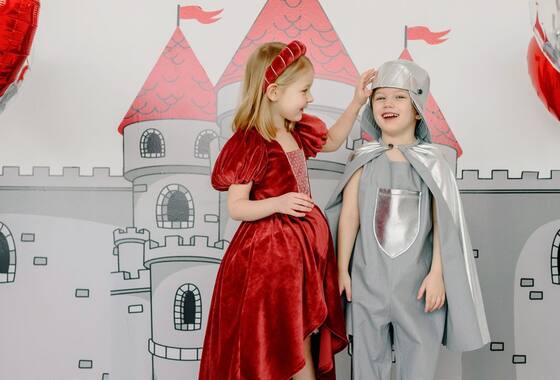
Why dress up? Chassidic teaching points out that G-d's name never appears in the Book of Esther. He is hidden behind events that look like coincidence, just like a face behind a mask. Costumes remind us that G-d is quietly guiding the story. See Purim costumes.
Hamantaschen are three-cornered pastries filled with poppy seed or jam, and many people eat them on Purim. The shape is a playful reminder of the story.
The day before: the Fast of Esther
The day before Purim is a minor fast, the Fast of Esther, recalling Esther's own fast and prayer. See the Fast of Esther. Purim itself is a day of joy, not fasting.
Take the next step
- Come hear the Megillah. Call Rabbi Labkowski at 925-384-7242 to hear what is planned for Purim in Lamorinda.
- Read about the four mitzvahs so you know exactly what to do.
- Keep going: Passover for beginners comes next in the Jewish year.
In Lamorinda: Families from Lafayette, Moraga and Orinda are welcome to hear the Megillah; no Hebrew needed. Call Rabbi Labkowski at 925-384-7242 to hear what is planned.
Common questions
What is Purim?
Purim is a Jewish holiday celebrating the rescue of the Jews of ancient Persia from Haman's plot, as told in the Book of Esther.
What do you do on Purim?
You hear the Megillah read at night and in the day, give charity to at least two poor people, send two kinds of food to a friend, and enjoy a festive meal. Many people wear costumes.
Why do we dress up on Purim?
G-d's hand is hidden in the story of Purim, as a person hides behind a mask. Costumes remind us that G-d works quietly behind the scenes. Children especially love it.
What do you eat on Purim?
Hamantaschen, three-cornered filled pastries, are the classic treat, and the festive meal is often a full holiday dinner. Your mishloach manot basket includes two kinds of ready-to-eat food.
Why do we make noise when Haman's name is read?
We blot out the name of Haman, who tried to destroy the Jews. The reader waits for quiet before continuing, so every word is heard.
Do I have to hear the Megillah in Hebrew?
You must hear every word, so if you do not understand Hebrew, follow along in English. Anyone can come, and the Rabbi can help you.
Questions about this, or something on your mind? Message the Rabbi or the Rebbetzin privately, or call 925-384-7242. · Email
Read next
 Megillah Reading on Purim: How and When to Hear the Book of EstherWhat the Megillah is, why we read the Book of Esther on Purim, when to hear it night and day, the blessings, and why we make noise at Haman.Read next →