
Learn › Jewish home › Candles, challah and modesty
Separating Challah (Hafrashat Challah): How and Why
What hafrashat challah is, how much dough needs it, the blessing in Hebrew and English, and how to separate challah step by step.
On this page · 2 min read
Where the mitzvah comes fromWhich dough needs itHow to separate challah, step by stepThe blessingA time for prayerHafrashat challah means "separating challah": taking a small piece from a batch of dough before baking and setting it aside as a gift to G-d. It is one of the special mitzvot entrusted especially to Jewish women, and many see the moment of separating as a time of great blessing and prayer.
Where the mitzvah comes from
The Torah says: "Of the first of your dough you shall set apart a challah as a gift" (Numbers 15:20). In Temple times, this portion was given to a Kohen. Today, since we cannot give it to a Kohen in a state of purity, we separate it and burn it, so the mitzvah is still kept.
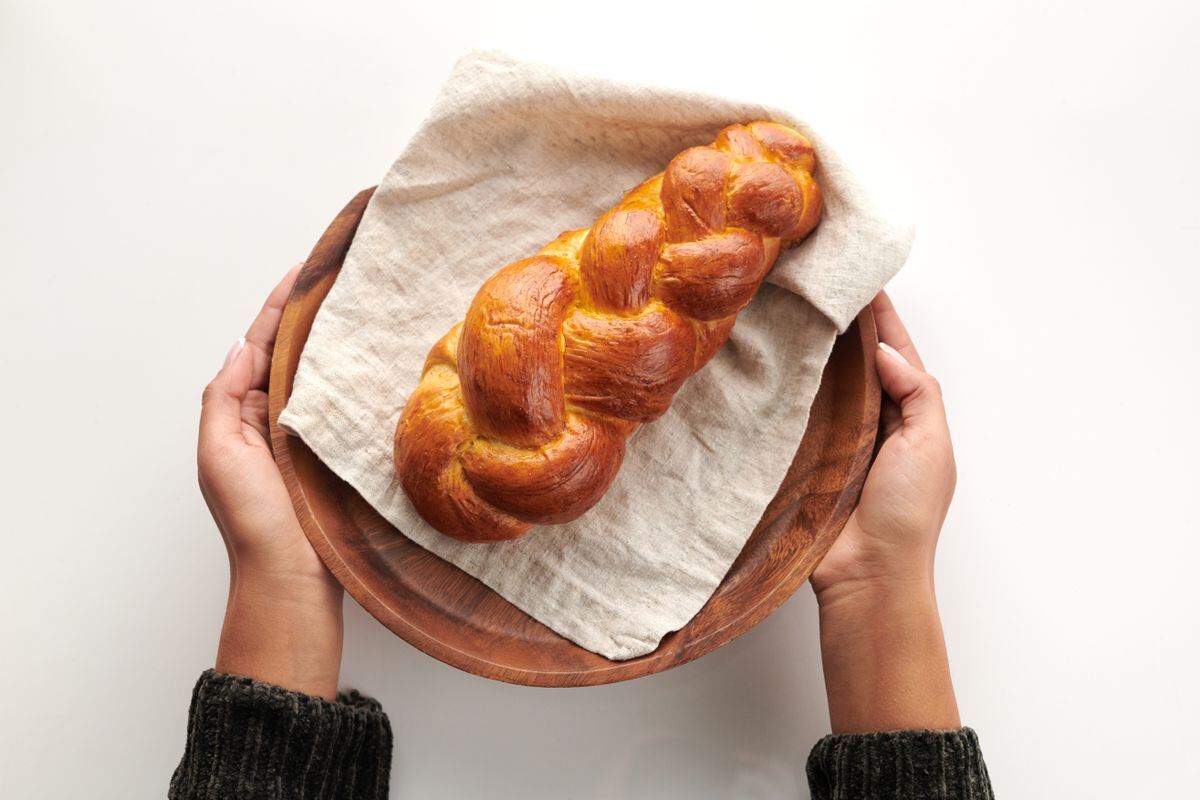
The word challah originally meant this separated portion. Later, the braided Shabbat loaves took their name from it. Read more in our guide to challah.
Which dough needs it
The mitzvah applies to dough made from any of the five grains: wheat, barley, rye, oats or spelt. Whether you bake bread, rolls or even some cakes, it depends mainly on how much flour is in the batch:
- A small batch needs no separation at all.
- A medium batch is separated, and you ask the Rabbi whether to say the blessing.
- A large batch is separated with a blessing.
The usual amounts are: under about 2.5 lb (1.1 kg) of flour, no separation; from 5 lb (about 2.25 kg), separate with a blessing; in between, separate and ask a rabbi about the blessing. Customs differ, and dough made mostly with juice or eggs instead of water has its own rules, so ask the Rabbi for your recipe.
How to separate challah, step by step
- Knead the dough until it is ready to be shaped.
- Say the blessing (if the batch is large enough).
- Pull off a small piece, about the size of an olive.
- Hold it up and say: "Harei zu challah," meaning "This is challah."
- Set it aside, wrapped in foil.
- Burn it. Place it in the oven or over a flame until it is completely charred, on its own and not together with the bread you are baking. Then wrap it and discard it respectfully.
The blessing
Hebrew: בָּרוּךְ אַתָּה ה' אֱלֹקֵינוּ מֶלֶךְ הָעוֹלָם, אֲשֶׁר קִדְּשָׁנוּ בְּמִצְוֹתָיו, וְצִוָּנוּ לְהַפְרִישׁ חַלָּה
Transliteration: Baruch atah Ado-nai, Elo-heinu melech ha'olam, asher kid'shanu b'mitzvotav, v'tzivanu l'hafrish challah.
Translation: Blessed are You, L-rd our G-d, King of the universe, who has made us holy with His commandments, and commanded us to separate challah.
A time for prayer
There is a beautiful tradition that the moment of separating challah is an auspicious time to pray. Many women pause after the blessing to ask G-d for the health and well-being of their family, for a friend in need, or for a match or a child. Some bake challah together in groups, each praying for someone in need. This is a fitting time to give tzedakah too.
In Lamorinda: Want to learn to bake and separate challah with other women? Visit jewishlamorinda.com/programs/womens-circle or call Tzipora Labkowski at 925-384-7241.
Common questions
Can a man separate challah?
Yes. Anyone who bakes can separate challah, and a bakery separates challah from its dough. It is a mitzvah given especially to women because they traditionally bake for the home.
What if I forgot to separate challah before baking?
In many cases challah can still be separated from the baked bread. Put all the loaves together, take a small piece and follow the steps. Ask the Rabbi if you are not sure.
Do I need to separate challah from store-bought bread?
No. A reliable kosher bakery separates challah from its dough. Look for kosher certification. See our guide to kosher symbols.
Why do we burn the piece?
In Temple times, the portion was eaten by a Kohen in purity. Today we cannot do that, so we burn it, to make sure no one eats something that was given to G-d.
Questions about this, or something on your mind? Message the Rabbi or the Rebbetzin privately, or call 925-384-7242. · Email
Read next
 Challah: Shabbat Bread and the Mitzvah of Separating ChallahWhat challah is, why we eat two loaves on Shabbat, how to say Hamotzi, and how to do the mitzvah of separating challah with the blessing.Read next →