
Learn › Shabbat & holidays › The Shabbat table and meals
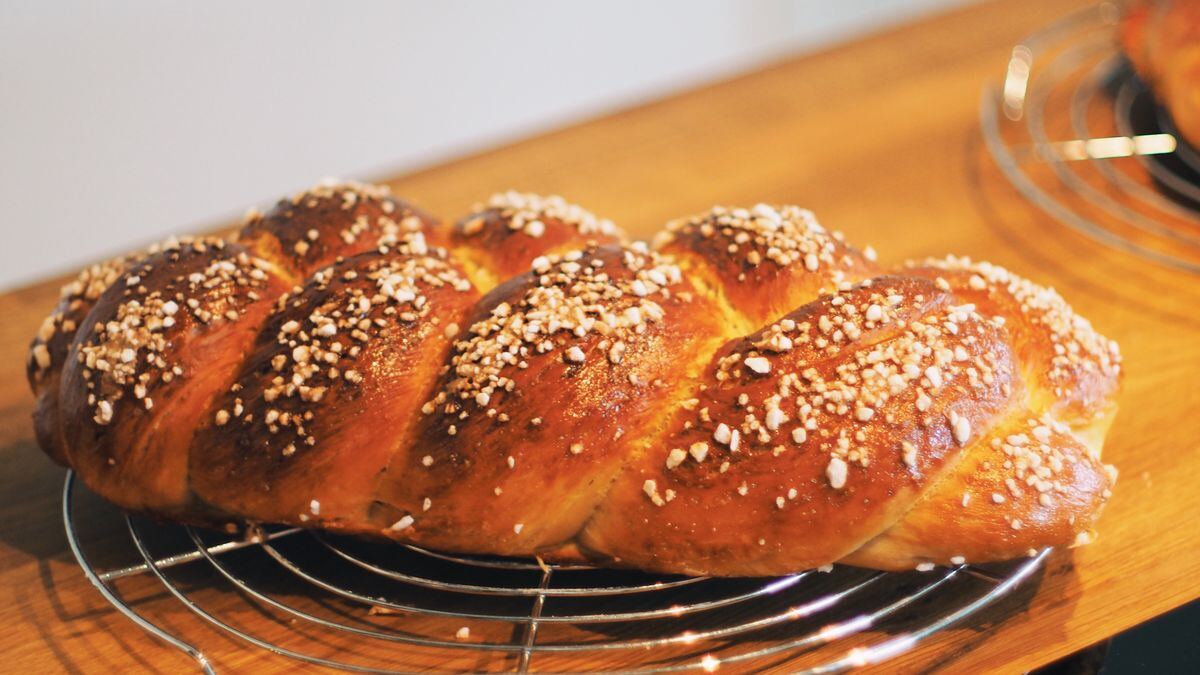
Challah: Shabbat Bread and the Mitzvah of Separating Challah
What challah is, why we eat two loaves on Shabbat, how to say Hamotzi, and how to do the mitzvah of separating challah with the blessing.
On this page · 3 min read
Two meanings of challahWhy two loaves on ShabbatHow to say Hamotzi over challahSeparating challah, step by stepChallah is the braided bread eaten at Shabbat and holiday meals, and it is also the name of a mitzvah: separating a small piece of dough when baking bread. Both remind us that our food, and everything we have, comes from G-d.
Two meanings of challah
In the Torah, challah (חַלָּה) is the portion of dough given to the Kohanim, the priests, in the Holy Temple. Today, since we have no Temple, a small piece is separated and burned. Over time the name "challah" became attached to the special loaves themselves.
Why two loaves on Shabbat
At each Shabbat meal we say the blessing over two whole loaves, called lechem mishneh, "double bread." This recalls the manna in the desert: G-d sent a double portion on Friday so no one would need to gather it on Shabbat. Many people braid their challah, and holiday challahs, especially on Rosh Hashanah, are often round.
How to say Hamotzi over challah
- Wash hands. Fill a cup with water and pour it three times on the right hand, then three times on the left (the Chabad custom; many others pour twice). Say the blessing:
Baruch atah Ado-nai, Elo-heinu melech ha'olam, asher kid'shanu b'mitzvotav v'tzivanu al n'tilat yadayim. "Blessed are You, L-rd our G-d, King of the universe, who has made us holy with His commandments and commanded us concerning washing the hands."
- Stay quiet from washing until you eat the bread.
- Uncover the two loaves, hold them together and say:
Baruch atah Ado-nai, Elo-heinu melech ha'olam, hamotzi lechem min ha'aretz. "Blessed are You, L-rd our G-d, King of the universe, who brings forth bread from the earth."
- Cut and dip in salt. Cut one loaf, dip the piece in salt, eat, and pass pieces to everyone.
The table is compared to the altar in the Temple, and the salt recalls the salt used on the offerings.
Separating challah, step by step
When you bake a large enough batch of bread dough made with flour from wheat, barley, spelt, rye or oats, there is a mitzvah to separate a piece. It is traditionally a special mitzvah of Jewish women, though anyone baking can do it.
- After kneading, before shaping, check the amount of flour.
- If there is enough flour for a blessing, say:
Baruch atah Ado-nai, Elo-heinu melech ha'olam, asher kid'shanu b'mitzvotav v'tzivanu l'hafrish challah. "Blessed are You, L-rd our G-d, King of the universe, who has made us holy with His commandments and commanded us to separate challah."
- Pull off a small piece, about the size of an olive, and say "Harei zu challah," "This is challah."
- Burn the piece wrapped in foil in the oven or broiler, not together with food being baked, or wrap it well and dispose of it respectfully.
How much flour? The amounts are approximate and opinions differ. Many follow these amounts: from about 2 lb 11 oz (1.2 kg) of flour you separate without a blessing, and from about 4 lb 15 oz (2.25 kg) you say the blessing. Ask the Rabbi which amount to follow.
Many women use this moment for personal prayer, for their family and for anyone in need.
In Lamorinda: We can teach you to bake challah and do the separation with the blessing, and help with any question about it. Call 925-384-7242.
Common questions
Do I have to bake my own challah?
No. Store-bought kosher challah is perfectly fine for Shabbat. Baking at home is a beautiful extra, and gives the opportunity to do the mitzvah of separating challah.
What if I forgot to separate challah before baking?
In most cases you can still separate a piece from the baked bread. Ask the Rabbi for how to do it correctly, especially if it is already Shabbat.
Why do we dip challah in salt?
The Shabbat table is compared to the altar of the Holy Temple, where every offering was salted. Salt also stands for an everlasting covenant between G-d and the Jewish people.
Can I use any bread if I do not have challah?
Yes. Any kosher bread, matzah or rolls can be used for the Shabbat blessing, ideally two whole pieces. Challah is the custom, not a requirement.
Questions about this, or something on your mind? Message the Rabbi or the Rebbetzin privately, or call 925-384-7242. · Email
Read next
 Shabbat: What It Is and How to Celebrate ItA plain-English guide to Shabbat, the Jewish day of rest: what it means, when it starts and ends, and how to celebrate it at home step by step.Read next →