
Learn › Prayer & Torah › Blessings (brachot)
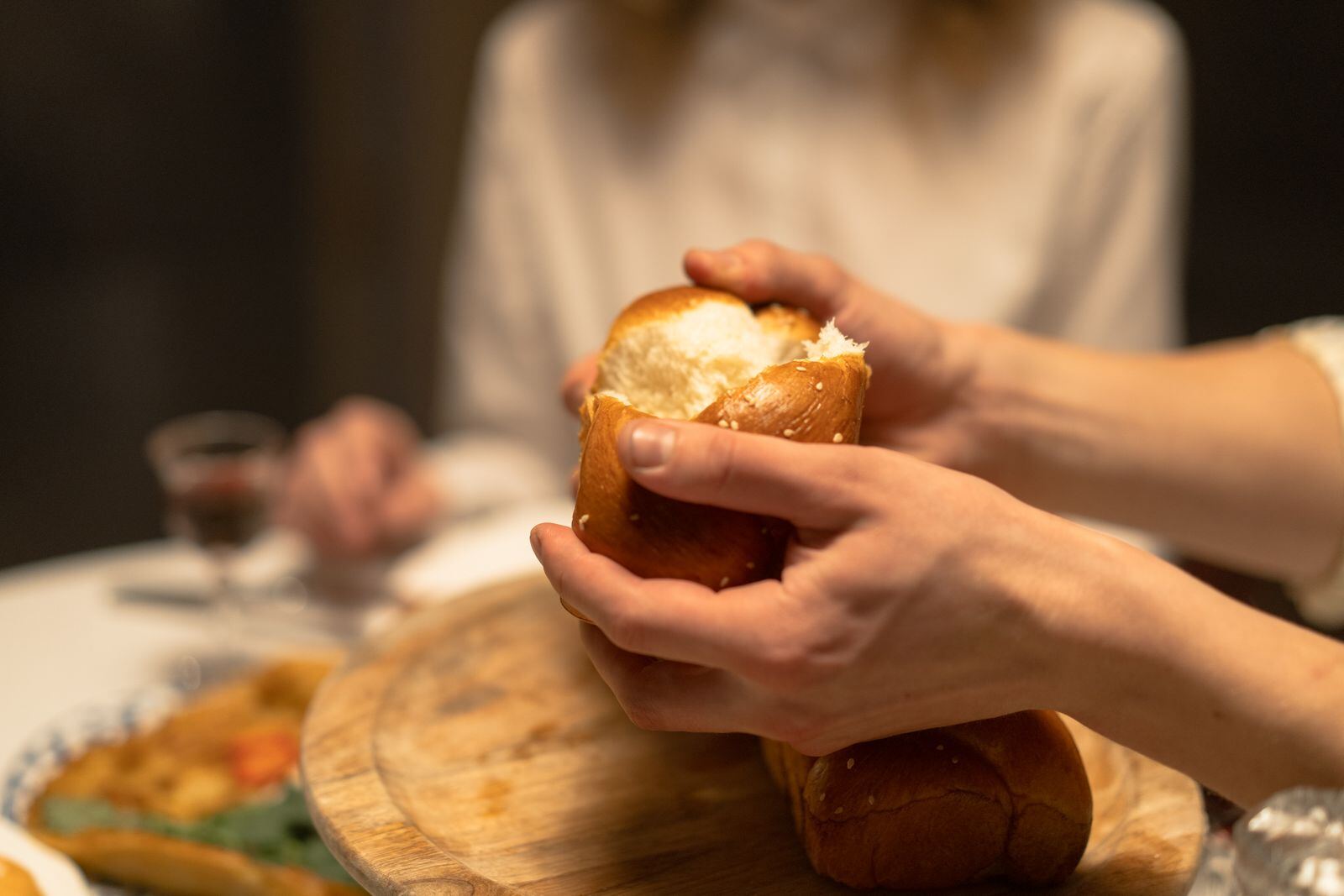
Birkat Hamazon: Grace After Meals Explained
What Birkat Hamazon is, when to say it, its four blessings, zimun with three or more, holiday additions, and the shorter blessings for other foods.
On this page · 2 min read
When to say itThe four blessingsBefore and afterZimun: inviting others to blessAdditions for special daysShorter blessings for other foodsBirkat Hamazon, also called "bentching," is the blessing said after a meal that included bread. It is a mitzvah from the Torah itself: "You shall eat and be satisfied, and bless the L-rd your G-d for the good land He has given you" (Deuteronomy 8:10).
When to say it
Birkat Hamazon is said after eating at least a kezayit (about the size of an olive, roughly one ounce) of bread, challah or matzah. It should be said at the place where you ate, before the food is fully digested, usually within about an hour and a quarter after you stopped eating, as long as you still feel satisfied.
A meal with bread begins with washing hands (netilat yadayim) and the blessing of Hamotzi, and it ends with Birkat Hamazon.
The four blessings
- Hazan, "who nourishes all." Thanks for food for every living being. The Sages attribute it to Moses, when the manna fell in the desert.
- The Land. Thanks for the Land of Israel, the covenant and the Torah. Attributed to Joshua.
- Jerusalem. A prayer for the rebuilding of Jerusalem and the Holy Temple. Attributed to King David and King Solomon.
- Hatov v'hameitiv, "who is good and does good." Added by the Sages after the tragedy of Betar.
These are followed by a series of short requests beginning "Harachaman," "May the Merciful One," including a blessing for the hosts.
Before and after
- Before: on weekdays, Psalm 137 is customarily said. On Shabbat and holidays, Psalm 126, "Shir Hamaalot," is sung instead.
- Mayim acharonim: many pour a little water over the fingertips before Birkat Hamazon, a custom Chabad observes carefully.
Zimun: inviting others to bless
When three or more men eat bread together, one leads a zimun, an invitation to bless: "Rabbotai, nevarech," "Friends, let us bless." The others answer, and then everyone continues. With ten men, the word Elo-heinu, "our G-d," is added. Women may also make their own zimun when three or more eat together; ask the Rabbi or Rebbetzin how it is done.
Additions for special days
- Shabbat: the paragraph Retzei is added.
- Holidays and Rosh Chodesh: Yaaleh v'yavo is added.
- Chanukah and Purim: Al hanissim is added.
- Shabbat and holidays: a special Harachaman for the day.
Shorter blessings for other foods
If you ate without bread, the blessing afterward is shorter:
- Al hamichya (the "three-in-one" blessing): after cake, cookies and pastries from the five grains, after wine or grape juice, and after the special fruits of the Land of Israel such as grapes, figs, pomegranates, olives and dates.
- Borei nefashot: after most other foods and drinks.
Read more in our guide to blessings.
In Lamorinda: Want a bentcher or a quick lesson in saying Birkat Hamazon? Call Rabbi Labkowski at 925-384-7242.
Common questions
Do I have to say it in Hebrew?
Hebrew is best, but you may say Birkat Hamazon in any language you understand. Many bentchers include translation and transliteration.
What if I forgot to say it?
If you remember while you are still satisfied from the meal, say it then. If more time has passed, ask the Rabbi.
What is a bentcher?
A small booklet containing Birkat Hamazon and other blessings and songs. Many families keep a set at the table, often from weddings and celebrations.
Is there a short version?
There is a shortened text in some siddurim for children or urgent situations, but the full version is the standard. Ask the Rabbi when a short version is appropriate.
Questions about this, or something on your mind? Message the Rabbi or the Rebbetzin privately, or call 925-384-7242. · Email
Read next
 Jewish Blessings Over Food: Which Bracha to Say and WhenA simple guide to Jewish blessings (brachot): the six blessings before food, the blessings after eating, Shehecheyanu, and how to say them.Read next →