
Learn › Jewish ideas › Israel and Jerusalem
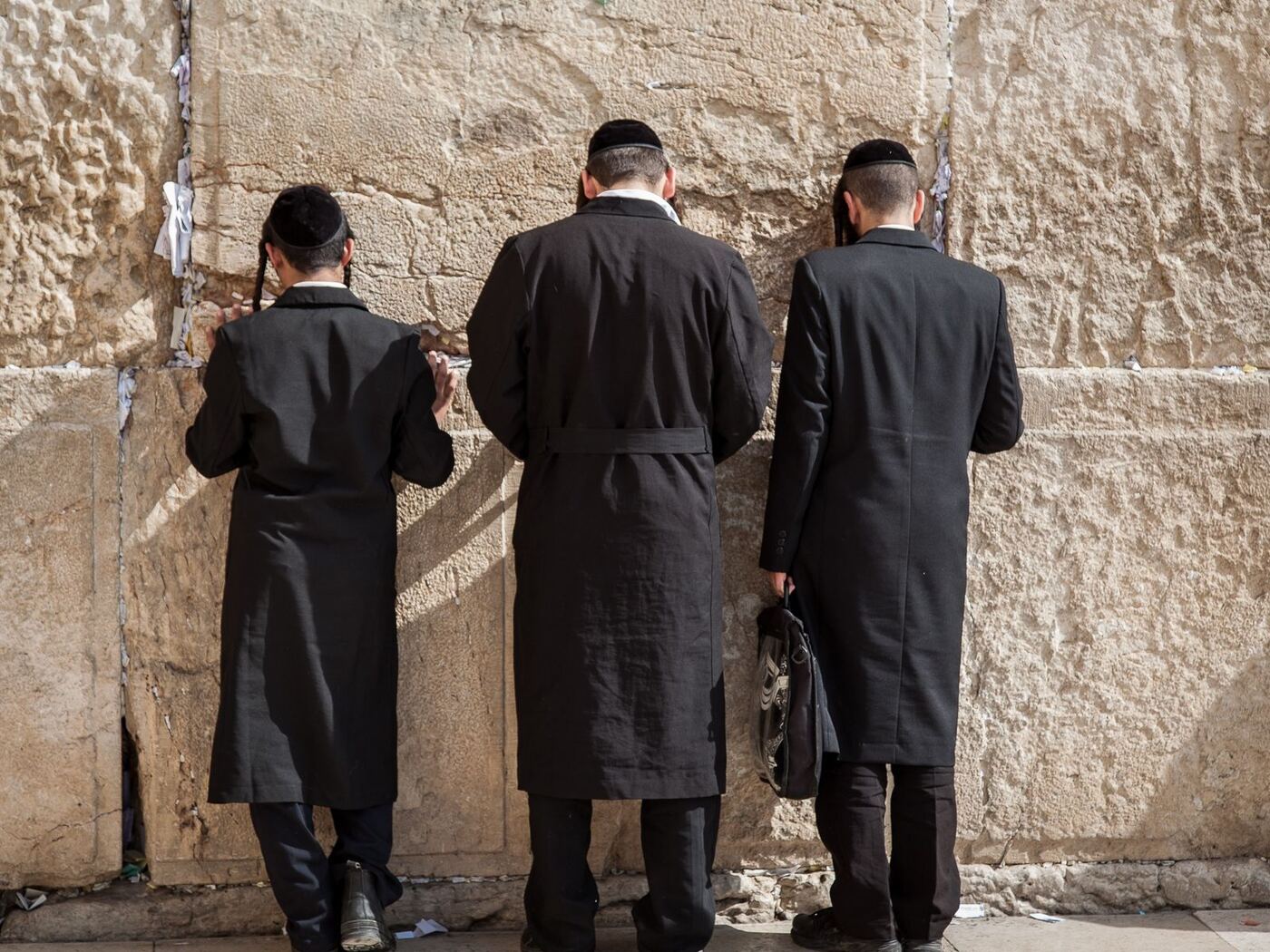
The Western Wall (Kotel): History and Meaning
What the Western Wall is, why it is the holiest place where Jews pray today, the custom of placing notes, and how to visit.
On this page · 2 min read
What the Western Wall isWhy it is so holyPraying at the KotelNotes in the wallLeaving the KotelThe Western Wall, called the Kotel in Hebrew, is part of the ancient retaining wall that surrounded the Temple Mount in Jerusalem. It is the closest place to the site of the Holy Temple where Jews gather to pray today, and for many centuries it has been the heart of Jewish prayer and longing.
What the Western Wall is
When the Second Temple was expanded, huge walls were built around the hill to support a wide platform. The Temple stood on top. When the Romans destroyed the Temple in 70 CE, part of the western retaining wall survived. That remaining section is the Western Wall.
Some of its stones are enormous, and the lower layers date back to Second Temple times. The part most people see is the open prayer plaza, but the wall continues underground for a long distance.
Why it is so holy
The Midrash teaches that the Divine Presence, the Shechinah, never left the Western Wall. Even after the destruction, G-d's presence remains there in a special way. Since the Holy of Holies stood on the Temple Mount, Jews everywhere face toward this place when they pray.
For generations, Jews who could reach Jerusalem came to the wall to pour out their hearts. It became known in some languages as the "Wailing Wall" because of the tears shed there over the destruction of the Holy Temple. Jews usually call it simply "the Kotel."
Praying at the Kotel
- Any time. People pray there day and night, all year round.
- Prayer services. Minyanim for morning, afternoon and evening prayers meet there constantly.
- Separate sections. There are separate prayer areas for men and women, as in a traditional synagogue.
- Modest dress. Visitors dress respectfully. Men cover their heads, and kippahs are usually available.
- Tefillin. Many Jewish men put on tefillin there, some for the first time in their lives, and volunteers are often ready to help.
- Tehillim. Many say Psalms, especially for loved ones who need blessings. See Tehillim.
Notes in the wall
A well-known custom is writing a short prayer on a slip of paper and placing it in the cracks between the stones. These notes are gathered twice a year, before Passover and before Rosh Hashanah, and buried respectfully on the Mount of Olives, since they contain prayers.
Leaving the Kotel
Many people have the custom to walk backward a few steps when leaving, rather than turning their back right away, as one does when leaving a king.
In Lamorinda: Want to say a prayer or Tehillim for someone? Share names with Chabad of Lamorinda through jewishlamorinda.com/tehillim or call 925-384-7242.
Common questions
Is the Western Wall part of the Temple itself?
No. It is part of the retaining wall around the Temple Mount, not a wall of the Temple building. It is the closest accessible place to where the Temple stood.
Can anyone place a note in the Western Wall?
Yes. Anyone may write a prayer and place it in the wall. Many people also ask friends traveling to Jerusalem to place a note for them.
What should I pray for at the Kotel?
Whatever is on your heart: health, family, livelihood, and the rebuilding of Jerusalem. You can pray in any language. Saying a chapter of Tehillim or the Shema is a beautiful choice.
Do I need to go to Israel for my prayers to be heard?
No. G-d hears every prayer, wherever it is said. Facing Jerusalem when you pray connects you to the Kotel from anywhere in the world.
Questions about this, or something on your mind? Message the Rabbi or the Rebbetzin privately, or call 925-384-7242. · Email
Read next
 The Holy Temple in Jerusalem (Beit HaMikdash)What the Holy Temple was, the First and Second Temples, why they were destroyed, how we remember them today, and the Third Temple.Read next →