
Learn › Shabbat & holidays › Fast days, the Three Weeks and Tisha B'Av
Tisha B'Av for Beginners: The Saddest Day, and Why It Ends in Hope
What Tisha B'Av mourns, how the fast works, the customs of the day, the Three Weeks before it, who should not fast, and why it ends with hope.
On this page · 3 min read
What we mournThe Three Weeks beforeThe fast and the customs of the dayWho should not fastWhy it ends with hopeTisha B'Av, the ninth of the Hebrew month of Av, is unlike any other Jewish day: once a year, in the heat of summer, the Jewish people sits on the floor and cries. Here is what the day is about, how it is kept, and why it is also a day of hope.
What we mourn
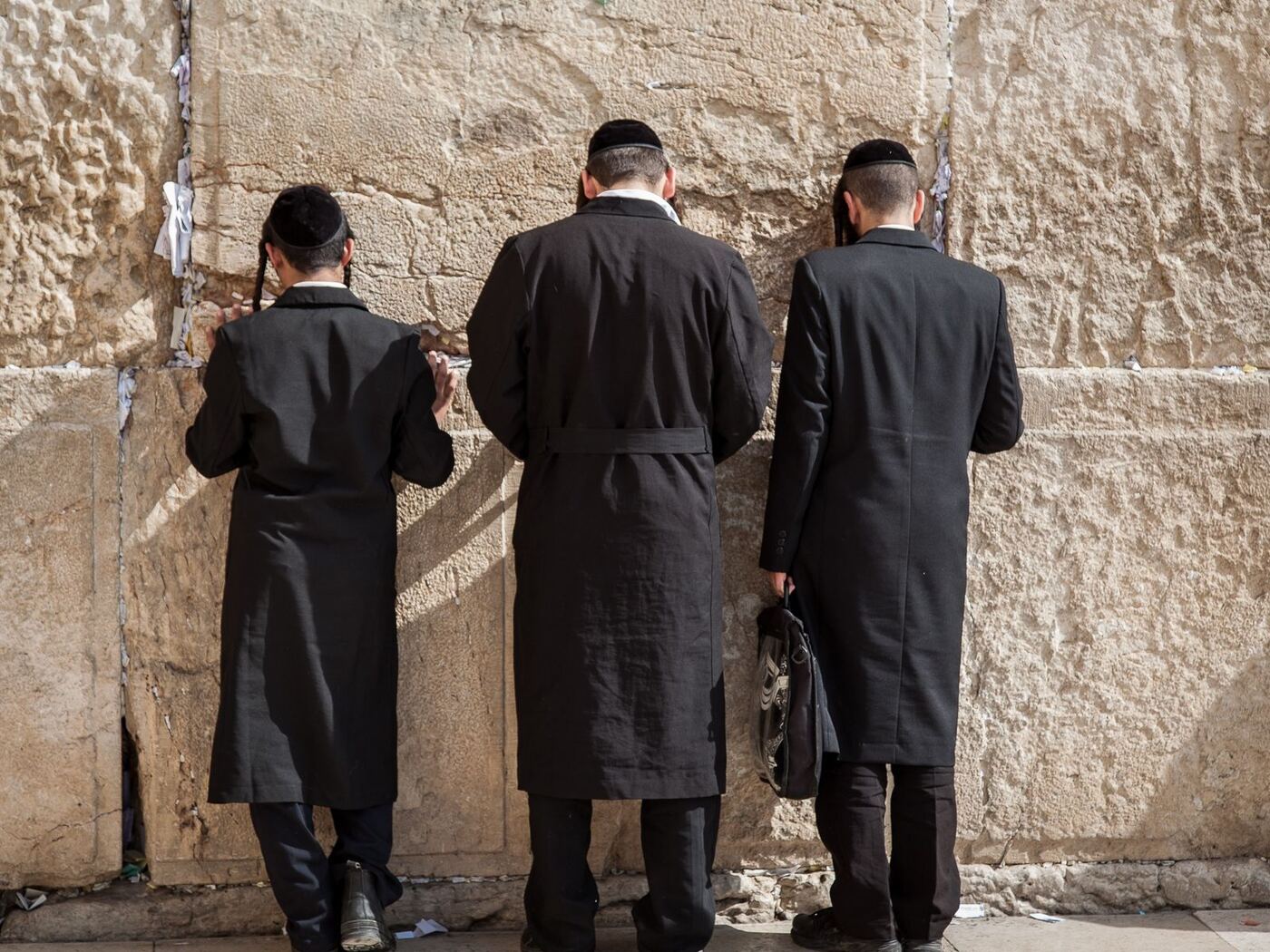
On the ninth of Av, both Holy Temples in Jerusalem were destroyed: the first by the Babylonians, the second by the Romans. The Temple was the place where G-d's presence was felt openly in the world, where closeness to G-d was as tangible as a building. Losing it, twice, sent the Jewish people into an exile that has not fully ended. See the Holy Temple and Jerusalem.
The sages trace other sorrows to the same date, beginning with the night the spies returned and the people wept without reason; G-d said it would become a night of weeping for generations. Over the centuries Tisha B'Av became the day for all of Jewish grief, down to every tragedy of our long history.
The Three Weeks before
Tisha B'Av ends a season that begins three weeks earlier with the fast of the 17th of Tammuz, the day the walls of Jerusalem were breached. During the Three Weeks we hold no weddings and do not listen to music, live or recorded; from the first of Av, the "Nine Days," we also give up meat and wine except on Shabbat. See the Three Weeks.
The fast and the customs of the day
Tisha B'Av is a full fast like Yom Kippur: from sunset to nightfall the next day we do not eat or drink.
The day has the customs of mourning. We do not wear leather shoes, bathe for pleasure or even greet one another. Until midday we sit on the floor or on low stools, as mourners do during shiva.
In the evening we read Eicha, the Book of Lamentations, the prophet Jeremiah's cry over the fallen city. Tallit and tefillin are worn in the afternoon instead of the morning.
Who should not fast
Judaism puts health first. Someone who is ill, a woman who has recently given birth, anyone whose doctor says fasting is risky, and children under Bar or Bat Mitzvah age should not fast; a pregnant or nursing woman should ask a doctor and the Rabbi. If you need to eat, you have not failed the day; you can still sit low and read Eicha. See fast days.
Why it ends with hope
Halfway through Tisha B'Av, the mood begins to turn. At midday we rise from the floor, put on tallit and tefillin, and pray: "Console, O G-d, the mourners of Zion." Tradition teaches that Moshiach is born on Tisha B'Av: the seed of redemption is planted in the very moment of destruction.
Chassidic teaching puts it this way: a destruction is only a destruction if nothing comes after it. The sages compared G-d to a father who, rather than strike his child, tears down the house around him; the love did not end, and he will rebuild. The Temple we mourn is the Temple we are promised, and the prophets say that one day this fast will become a day "of joy and gladness." We fast to feel the loss sharply enough to want the rebuilding, and then to do something about it: more kindness between Jews, more light in the world. See Moshiach and hope in hard times.
Six days later comes Tu B'Av, a small festival of love and joy. For this year's dates and events, see the Tisha B'Av holiday page, or call the Rabbi to hear what Chabad of Lamorinda has planned.
In Lamorinda: Every Jew from Lafayette, Moraga and Orinda is welcome on Tisha B'Av. Call Rabbi Yisroel Labkowski at 925-384-7242 to hear what Chabad of Lamorinda has planned this year, or with questions about fasting.
Common questions
Why mourn a building destroyed two thousand years ago?
Because we are not mourning a building. We are mourning the distance between the world as it is and the world as G-d means it to be.
Can I work on Tisha B'Av?
Work is permitted but discouraged: the sages say that one who works on Tisha B'Av "will never see a sign of blessing from it."
What if Tisha B'Av falls on Shabbat?
The fast is pushed to Sunday. Shabbat itself is kept normally, and the fast begins at sundown on Saturday night.
I'm not sure I can fast the whole day. Should I try?
If you are healthy, yes. If you have a medical condition, talk with your doctor and the Rabbi before the fast, not during it.
Questions about this, or something on your mind? Message the Rabbi or the Rebbetzin privately, or call 925-384-7242. · Email
Read next
 The Three Weeks and the Nine Days: Jewish Mourning CustomsWhat the Three Weeks and Nine Days are, why Jews mourn between the 17th of Tammuz and Tisha B'Av, and which customs apply and when.Read next →