
Learn › Jewish ideas › Being Jewish today

Jews and Christmas: A Warm, Simple Guide for December
What do Jewish families do on Christmas? Trees, office parties, "Merry Christmas," Nittel night and keeping December Jewish, warmly explained.
On this page · 3 min read
The short answerChanukah is not "the Jewish Christmas"Friends, neighbors and coworkersChildren in DecemberDecember 25 itselfIn December the whole country seems to celebrate Christmas: lights on every street, music in every store, parties at work and at school. Many Jewish families ask the same questions every year. Do we take part? What do we say to our neighbors? What do we tell the kids? Here are simple, friendly answers.
The short answer
Christmas is a Christian religious holiday, and Jews do not celebrate it. That is not a lack of friendship toward our neighbors. We respect their holiday, and we have our own: Chanukah, the festival of lights, which falls at about the same time of year, along with Shabbat every single week.
Judaism asks us not to adopt the religious customs of other faiths. So a Jewish home does not put up a Christmas tree, a nativity scene or Christmas decorations, even "just for fun." Our home has a menorah in the window instead.
Chanukah is not "the Jewish Christmas"
Because they come in the same season, people sometimes call Chanukah "the Jewish Christmas." It is not. Chanukah is much older and has its own meaning. More than 2,100 years ago, a small group of Jews, the Maccabees, stood up to a mighty empire that tried to make them give up the Torah. They won, rededicated the Holy Temple in Jerusalem, and a single jar of pure oil burned for eight days.
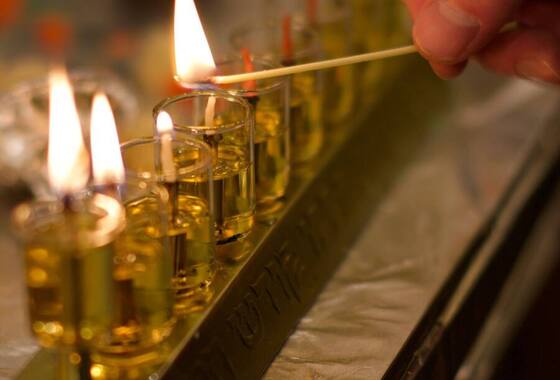
Chanukah's message is the very opposite of blending in: a little light pushes away a lot of darkness, and Jews light the menorah proudly, in the window, for the world to see. Read the Chanukah story and what Chanukah means.
Friends, neighbors and coworkers
- When someone wishes you "Merry Christmas." Answer with a smile: "Thank you, and happy holidays to you!" They mean it kindly, and a warm reply is a kiddush Hashem, a way of honoring G-d's name.
- Cards and gifts. It is kind to thank a mail carrier, a teacher or a neighbor at the end of the year. Many Jewish families give a "holiday" or New Year card, or a Chanukah gift of chocolate gelt, doughnuts or a small box of treats.
- The office party. Being friendly with colleagues is a good thing. Eating kosher, or knowing which events to skip, can raise questions. Ask the Rabbi when you are unsure.
- Share your own light. Invite friends to a public menorah lighting, bring doughnuts to the office, or explain Chanukah in a few sentences. See Chanukah for friends and coworkers.
Children in December
Children notice everything: the lights, the songs at school, friends talking about Santa. Instead of saying "we don't do that," give them something of their own to be proud of.
- Let them light their own menorah each night of Chanukah and give tzedakah before lighting.
- Make the nights special: latkes, doughnuts, dreidel, a family game, a small gift.
- If a class activity is about Christmas, talk with the teacher ahead of time; offer to come in and present Chanukah to the class.
- Feeling like the only Jewish child is real. Read the only Jewish kid in class at Chanukah.
December 25 itself
For most Jews, December 25 is an ordinary day off. Many families use it for time together, a hike, a family outing, or a mitzvah: visiting a senior or someone who is alone, or volunteering so others can be home with their families.
Chabad also keeps a quiet custom called Nittel night: on the night of December 24, from nightfall until midnight, Chassidim do not study Torah, and many spend the time on other things, such as playing chess or catching up on errands. After midnight, learning resumes.
In Lamorinda: Make December bright with Chanukah in Lafayette, Moraga and Orinda: see the Chanukah page at jewishlamorinda.com/holidays/chanukah or call 925-384-7242.
Common questions
Do Jews celebrate Christmas?
No. Christmas is a Christian religious holiday. Jews respect their neighbors' celebration and have their own holidays, including Chanukah, which often comes in December.
Can a Jewish family have a Christmas tree?
A Jewish home does not have a Christmas tree, even as a decoration, because it is a symbol of another religion's holiday. Put the menorah in the window instead, and make Chanukah the bright center of your December.
Is it okay to say "Merry Christmas" back?
A friendly reply such as "Thank you, happy holidays to you!" is warm and respectful. Your neighbor meant it kindly, and kindness in return is always right.
What should I tell my children about Santa and Christmas?
Tell them that their friends' families celebrate Christmas, and our family celebrates Chanukah and Shabbat. Respect others, and be proud of who you are. Then make Chanukah wonderful.
What do Jews do on Christmas Day?
Usually it is a regular day off: family time, outings, and for many a chance to volunteer or visit someone who is lonely. In Chabad, the night before is "Nittel," when Torah study pauses until midnight.
Questions about this, or something on your mind? Message the Rabbi or the Rebbetzin privately, or call 925-384-7242. · Email
Read next
 Chanukah Explained for Friends, Neighbors, Teachers and CoworkersChanukah in two minutes for friends, neighbors, teachers and coworkers: what it is, how to greet, kind gifts and how to include a Jewish colleague.Read next →