
Learn › Prayer & Torah › Talmud and Torah learning
The Hebrew Alphabet: All 22 Letters, Sounds and Meanings
Learn the 22 letters of the Hebrew alphabet (the aleph-bet), their sounds, the five final forms, vowels, and the meaning behind the letters.
On this page · 2 min read
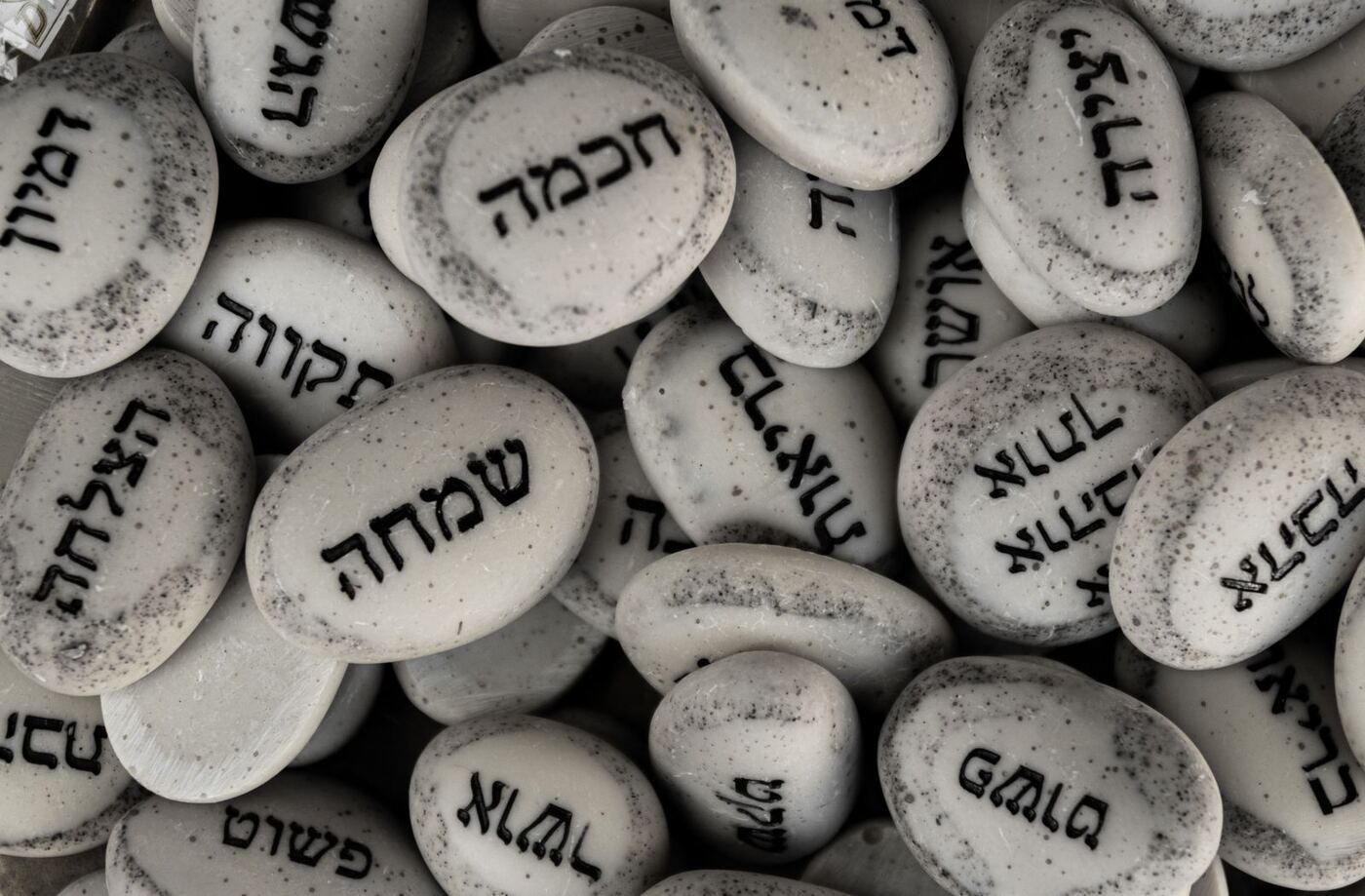
The 22 lettersThe five final lettersVowels (nekudot)Letters with deep meaningLearning the aleph-betThe Hebrew alphabet, called the aleph-bet, has 22 letters, all consonants, written and read from right to left. Vowels are shown with small dots and lines, and five letters take a different form at the end of a word.
The 22 letters
- א Aleph: silent, carries a vowel
- ב Bet / Vet: b (with a dot), v (without)
- ג Gimmel: g
- ד Dalet: d
- ה Hei: h
- ו Vav: v
- ז Zayin: z
- ח Chet: ch (as in Bach)
- ט Tet: t
- י Yud: y
- כ Kaf / Chaf: k (with a dot), ch (without)
- ל Lamed: l
- מ Mem: m
- נ Nun: n
- ס Samech: s
- ע Ayin: silent, carries a vowel
- פ Pei / Fei: p (with a dot), f (without)
- צ Tzadi: tz
- ק Kuf: k
- ר Reish: r
- ש Shin / Sin: sh (dot on right), s (dot on left)
- ת Tav: t (Ashkenazim pronounce it s without a dot)
The five final letters
Five letters change shape at the end of a word:
- כ becomes ך (final chaf)
- מ becomes ם (final mem)
- נ becomes ן (final nun)
- פ becomes ף (final fei)
- צ becomes ץ (final tzadi)
Vowels (nekudot)
Hebrew vowels are dots and dashes placed below, above or beside the letters. For example, a short line under a letter (patach) makes an "ah" sound, and a dot above (cholam) makes an "oh" sound. Torah scrolls are written without vowels; readers learn the correct pronunciation by heart. Prayer books and learning texts include them.
Letters with deep meaning
Jewish tradition teaches that the Hebrew letters are much more than symbols. According to Kabbalah, G-d created the world through the letters of the Ten Utterances of creation, and these letters continue to give life to everything. Each letter has its own meaning:
- Aleph has the numerical value of one, representing the One G-d.
- Bet means "house," and it is the first letter of the Torah, teaching that the world is G-d's home.
- Shin appears on the mezuzah and on the head tefillin, standing for one of G-d's names.
Every letter also has a number value (gematria). Aleph is 1, Bet is 2, Yud is 10, Kuf is 100, and so on. Gematria reveals hidden connections between words.
Learning the aleph-bet
Tips for beginners:
- Learn a few letters at a time, practicing similar-looking pairs like ב and כ, or ד and ר.
- Add vowels once you know the letters.
- Practice with prayers you hear often, like the Shema.
- Use songs and flashcards for children.
A Jewish child traditionally begins learning the letters at age three, at the upsherin. Children can continue at our Hebrew school.
In Lamorinda: Want to learn to read Hebrew? Call Rabbi Labkowski at 925-384-7242, and ask about our Hebrew school for children.
Common questions
How long does it take to learn to read Hebrew?
Many adults learn to sound out Hebrew in a few weeks of regular practice. Fluency takes longer, but reading prayers comes faster than you might think.
Is Biblical Hebrew the same as modern Hebrew?
They share the same alphabet and much vocabulary. Modern Israeli Hebrew adds new words and differs in some grammar and pronunciation.
What is the difference between Ashkenazi and Sephardi pronunciation?
The main differences are a few vowels and the letter ת without a dot, which Ashkenazim pronounce as "s" and Sephardim as "t." Both are authentic traditions.
Why is Hebrew called the holy tongue?
Hebrew is called lashon hakodesh, the holy language, because G-d gave the Torah in Hebrew and, according to tradition, created the world with it.
Questions about this, or something on your mind? Message the Rabbi or the Rebbetzin privately, or call 925-384-7242. · Email
Read next
 What Is the Torah? A Simple Guide to the Jewish BibleWhat the Torah is, the Five Books of Moses, the Written and Oral Torah, how a Torah scroll is made, and the weekly portion.Read next →