
Learn › Mourning & remembrance › Sitting shiva
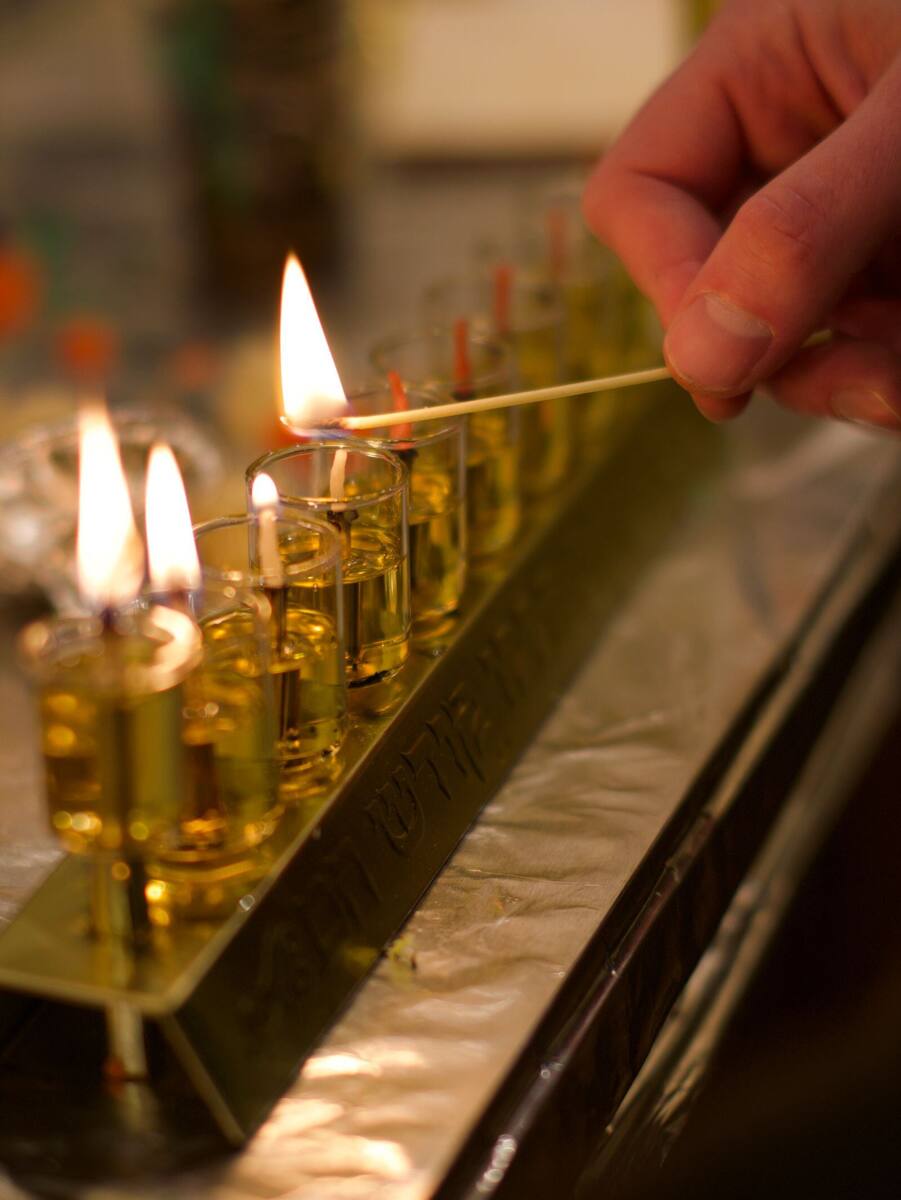
Chanukah While Mourning: Can a Mourner Light the Menorah and Say the Blessings?
Does Chanukah cancel shiva? Can a mourner light the menorah and say Shehecheyanu? What Jewish law teaches, what varies, and how to ask the Rabbi.
On this page · 3 min read
Does Chanukah end shiva?May a mourner light the menorah?What about the blessings, including Shehecheyanu?Hallel, synagogue and public lightingsHolding the light and the loss togetherYes, a mourner lights the Chanukah menorah, and Chanukah does not cancel shiva. Kindling the lights is obligatory even for a mourner sitting shiva, and the mourner says the blessings, but the details depend on the stage of mourning, so please ask the Rabbi about your case.
Does Chanukah end shiva?
No. A major festival such as Rosh Hashanah, Yom Kippur, Sukkot, Passover or Shavuot can end shiva, but Chanukah is a minor holiday and does not. All mourning observances continue through Chanukah. See shiva and holidays and shiva. If the seven days ended before Chanukah began, the mourner is in the period of shloshim or the year of mourning, and the questions below still apply. For the full path, see the year of mourning.
May a mourner light the menorah?
Yes, and the mitzvah applies to the mourner like everyone else. During the shloshim period, the mourner lights Chanukah candles at home. The lights are a mitzvah, and also a gentle comfort. They bring light into a house that may feel very dark.
If someone is an onen, a mourner between the death and the burial, the rules are different, so call the Rabbi.
What about the blessings, including Shehecheyanu?
This is the question people ask most. The common ruling is that the mourner recites all three blessings on the first night, including Shehecheyanu. That is one common answer. Other communities and authorities follow different customs about Shehecheyanu during mourning, and a person who follows a different tradition may do differently. Because customs vary and every situation is personal, please ask the Rabbi what to do in your family.
The lighting itself and the order are the same as for anyone, and are in How to light the menorah.
Hallel, synagogue and public lightings
- Hallel. Hallel is a prayer of joy, and a mourner in the house of shiva does not say it there, stepping aside briefly so that others can. In the synagogue the mourner says Hallel with the congregation.
- Lighting for others. A mourner during shiva does not light the menorah on behalf of a congregation, because the public joy it brings is not in keeping with the days of deepest mourning. At home, the mourner lights for their own household.
- Leading prayers. A person in the year after the passing of a parent continues to lead communal prayers on Chanukah, but does not lead Hallel. Ask the Rabbi what applies to you.
- Parties and public events. Mourners usually refrain from celebrations and parties during shiva, shloshim and, for a parent, the year. Whether you may attend something like Light Up Lafayette is a question for the Rabbi. See mourners and celebrations.
Holding the light and the loss together
Chanukah is a holiday of light in dark times. For someone grieving, it can be a hard holiday, with traditions that were once shared. Grief during the holidays speaks to the heart of that. In this guide we only answer the halachic questions.
Many mourners find comfort in lighting a candle in memory of a loved one, saying a prayer, or giving tzedakah in their merit. Friends can help by showing up. See comforting mourners.
In Lamorinda: Mourning this Chanukah? Rabbi Labkowski will answer your questions with care. Call 925-384-7242 or see /help/talk-to-the-rabbi.
Common questions
Does Chanukah cancel shiva?
No. Chanukah does not end shiva, and all mourning observances are kept. Only a major festival such as Rosh Hashanah, Yom Kippur or Sukkot can end it.
Can a mourner light Chanukah candles during shiva?
Yes. Lighting is obligatory for the mourner, and the blessings are said. Call the Rabbi if you are an onen, or if your situation is unusual.
Does a mourner say Shehecheyanu on Chanukah?
According to the laws of shloshim, yes, together with the other two blessings. Other authorities have different customs, so please ask the Rabbi what to do.
Can a mourner say Hallel on Chanukah?
In the synagogue, yes. In the house of shiva, a mourner does not say Hallel, and steps out briefly while others say it. Ask the Rabbi about your own situation.
Can a mourner go to a Chanukah party or public menorah lighting?
Mourners generally do not attend celebrations during shiva or shloshim, and for a parent, during the year. Speak with the Rabbi about whether and how to take part.
Who can I call if I do not know what to do?
Rabbi Labkowski at 925-384-7242, or write through Talk to the Rabbi. We are here for families in Lafayette, Moraga and Orinda.
Take the next step
- Call or write to the Rabbi with your questions: 925-384-7242 or Talk to the Rabbi.
- Read Grief during the holidays for the heart of this season.
- Say Kaddish or add a name to the prayer list.
Questions about this, or something on your mind? Message the Rabbi or the Rebbetzin privately, or call 925-384-7242. · Email
Read next
 Grief During the Holidays: When Someone Is Missing at the TableGetting through Chanukah, Passover, Rosh Hashanah or Thanksgiving after a loss: Jewish wisdom, practical ideas, and how to help a friend who is grieving.Read next →