
Learn › Shabbat & holidays › The Chanukah story and its meaning
Chanukah and Jewish Pride: Lighting Up When It Takes Courage
Chanukah and Jewish pride: how the menorah turns a small light into courage, why Chabad lights publicly, and how to take part with your community.
On this page · 3 min read
The courage of the MaccabeesWhy the menorah faces the streetHow Chanukah came out into the openProud togetherCourage and cautionChanukah teaches Jewish pride by asking us to put a light where others can see it. The Maccabees were a small, poorly armed group who stood up against a mighty empire, and every year the menorah tells their story, and ours: a small light can dispel great darkness.
The teachings of Chanukah carry a clear message for today: stand up for what is right, even against daunting odds, bring mitzvahs into public life, and be proud of Jewish practice and not ashamed to stand out.
The courage of the Maccabees
In the second century BCE, the Seleucid Greeks who ruled the Holy Land tried to replace Jewish mitzvah observance and faith in G-d with Greek culture. Judah the Maccabee led a small, poorly armed group that defeated a much larger army and reclaimed the Temple. Then they lit the Temple menorah with the one flask of pure oil they found. Their courage was not only in battle. It was in refusing to give up who they were. Read the full story in the Chanukah story and meet the Maccabees.
Why the menorah faces the street
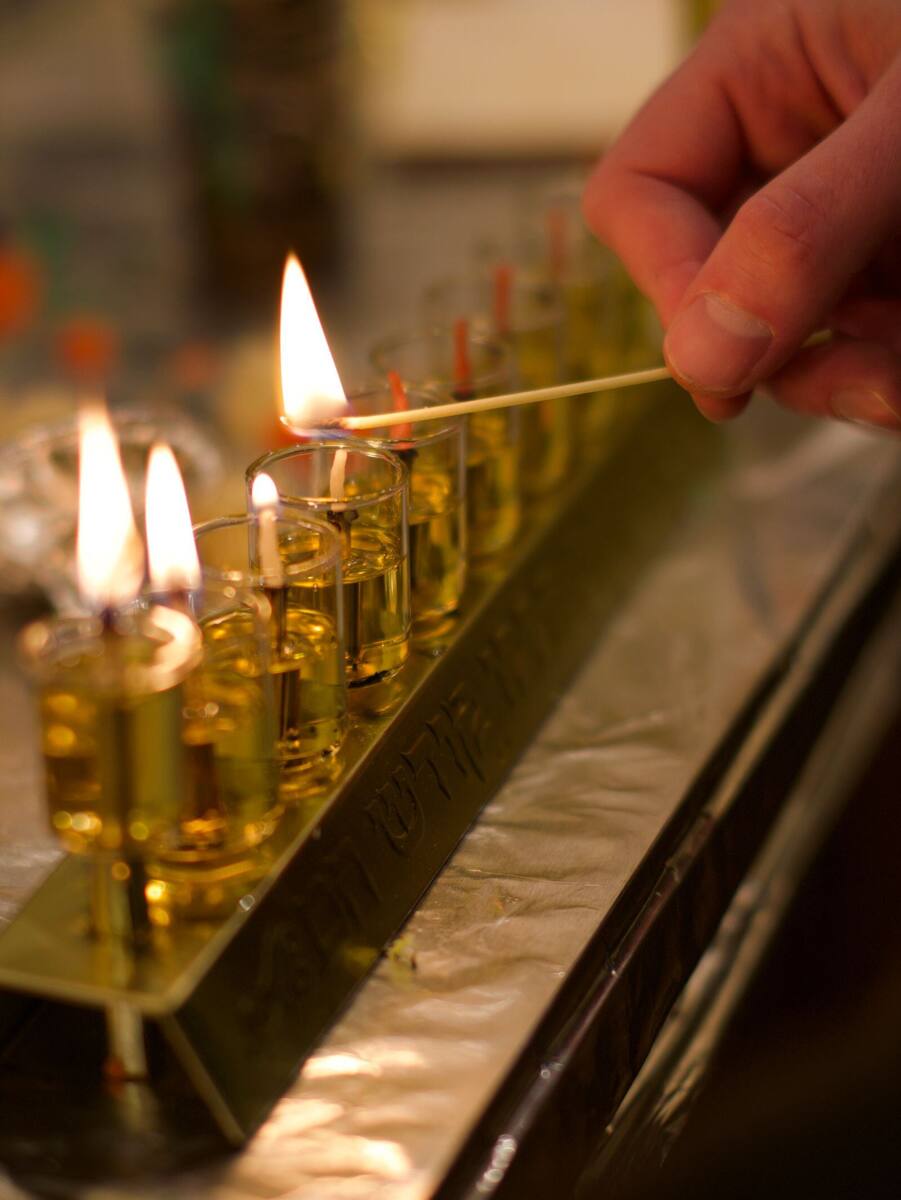
The menorah is meant to be seen. Its light should be visible from outside the home, in a doorway, outdoors or in a window facing the street, to publicize the miracle. The Rebbe taught that the menorah's light is meant to shine outward, into the darkness outside. A doorway is neither fully inside nor fully outside, neither wholly public nor private. The light that glows from the Jewish home is meant to radiate outward from a focused inner life; the Jewish home is called a mikdash me'at, a "mini Temple." See the Chanukah menorah for how Chabad lights it in an interior doorway opposite the mezuzah.
How Chanukah came out into the open
Before 1973, Chanukah was largely a private home observance. In December 1973, during the Yom Kippur War, the Rebbe launched a campaign to bring Chanukah into public view. Within two days, 10,000 menorahs were ordered, and by the end of the holiday about 60,000 had been given away. A homemade menorah on Fifth Avenue in Manhattan drew a large crowd, and public lightings followed in Philadelphia in 1974, San Francisco in 1975 and at the White House by 1979. The campaign brought a symbol of Jewish identity out of the home and onto the street after centuries in which persecution had driven it indoors. By 2026, about 15,000 public menorahs were lit worldwide. Read about public menorah lightings.
Proud together
In 2019 there was a surge in Jewish pride and record crowds at public lightings in response to rising antisemitism. One woman, planning to attend a public lighting for the first time after feeling uneasy about expressing her Jewish identity in public, said, "They want us to be afraid, to fear proudly proclaiming our Jewish identity." A Chabad rabbi at Penn State said the nation's darkness "must be fought with light and goodness." The reasons to attend a public lighting include refusing to give in to terror, bringing unity to polarized public spaces and showing children what proud Judaism looks like. See Jewish pride and facing antisemitism.
Courage and caution
Pride never means putting anyone in danger. Where and how to display a menorah is a question of both Jewish law and personal circumstance, and every situation is different. If you are worried about your safety, or unsure what to do, call Rabbi Labkowski at 925-384-7242 and ask. There are also many ways to take part in a way that suits you: a lighting at home, a community event, or a note to a friend. See menorahs in dark times.
In Lamorinda: Want to light up Lafayette with your community? Sign up at /events/chanukah-grand-menorah-lighting-2026 or call Rabbi Labkowski at 925-384-7242.
Common questions
What does Chanukah teach about Jewish pride?
Chanukah teaches that a small light can dispel great darkness, and that we should be proud of Jewish practice and not ashamed to stand out. The Maccabees stood up for what is right against daunting odds.
Why do we light the menorah publicly?
To publicize the miracle. The menorah's light should be visible from outside the home, in a doorway or a window facing the street, or at a public lighting.
Who started public menorah lightings?
The modern campaign goes back to the Rebbe, Rabbi Menachem M. Schneerson, who announced it in December 1973. Public lightings followed in Philadelphia, San Francisco and Washington.
Should I display my menorah if I feel unsafe?
Safety comes first, and each situation is different. Call the Rabbi at 925-384-7242 to discuss what makes sense for you.
How can I take part in a public lighting in Lafayette, Moraga or Orinda?
Join the Light Up Lafayette menorah lighting at Lafayette Plaza Park, free and open to everyone, and sign up online.
What if I feel uneasy about being openly Jewish?
You are not alone. One woman felt uneasy about expressing her Jewish identity in public and decided to attend a public lighting for the first time. Call Rabbi Labkowski at 925-384-7242, or Rebbetzin Tzipora Labkowski at 925-384-7241, to talk.
Take the next step
- Sign up for Light Up Lafayette and stand with your neighbors in Lafayette, Moraga and Orinda.
- Read Jewish pride and talking to kids about antisemitism.
- Call or text the Rabbi at 925-384-7242, or visit Talk to the Rabbi About Anything.
Questions about this, or something on your mind? Message the Rabbi or the Rebbetzin privately, or call 925-384-7242. · Email
Read next
 Jewish Pride: Living Proudly and Openly as a JewWhat Jewish pride means in Judaism, why it matters, and simple, everyday ways to express your Jewish identity with confidence and joy.Read next →