
Learn › Prayer & Torah › The synagogue and its services
Getting an Aliyah: How to Be Called Up to the Torah
What an aliyah to the Torah is, who gets called up and when, the blessings to say, and step by step what to do at the bimah.
On this page · 2 min read
When and how many aliyotWho is called upBeing calledStep by step at the bimahThe blessingsAfter your aliyahAn aliyah is the honor of being called up to the Torah during the public Torah reading to say the blessings before and after a section is read. The word means "going up," because you step up to the bimah and, spiritually, rise closer to G-d.
When and how many aliyot
The Torah is read in synagogue on these occasions, each with a set number of aliyot:
- Monday, Thursday and Shabbat afternoon: 3
- Rosh Chodesh and Chol Hamoed: 4
- Festivals: 5
- Yom Kippur: 6
- Shabbat morning: 7, plus Maftir, who also reads the Haftarah
Who is called up
The first aliyah goes to a Kohen, a descendant of Aaron. The second goes to a Levi. The rest go to any Jewish man, called a Yisrael. If no Kohen is present, a Yisrael takes the first aliyah.
Special priority is given to:
- A bar mitzvah boy
- A groom on the Shabbat before his wedding
- A father naming his newborn daughter
- Someone observing a yahrzeit
Being called
You are called by your Hebrew name and your father's Hebrew name, for example "Yaakov ben Avraham." Kohanim and Leviim add their title. If you are not sure of your Hebrew name, ask beforehand.
Step by step at the bimah
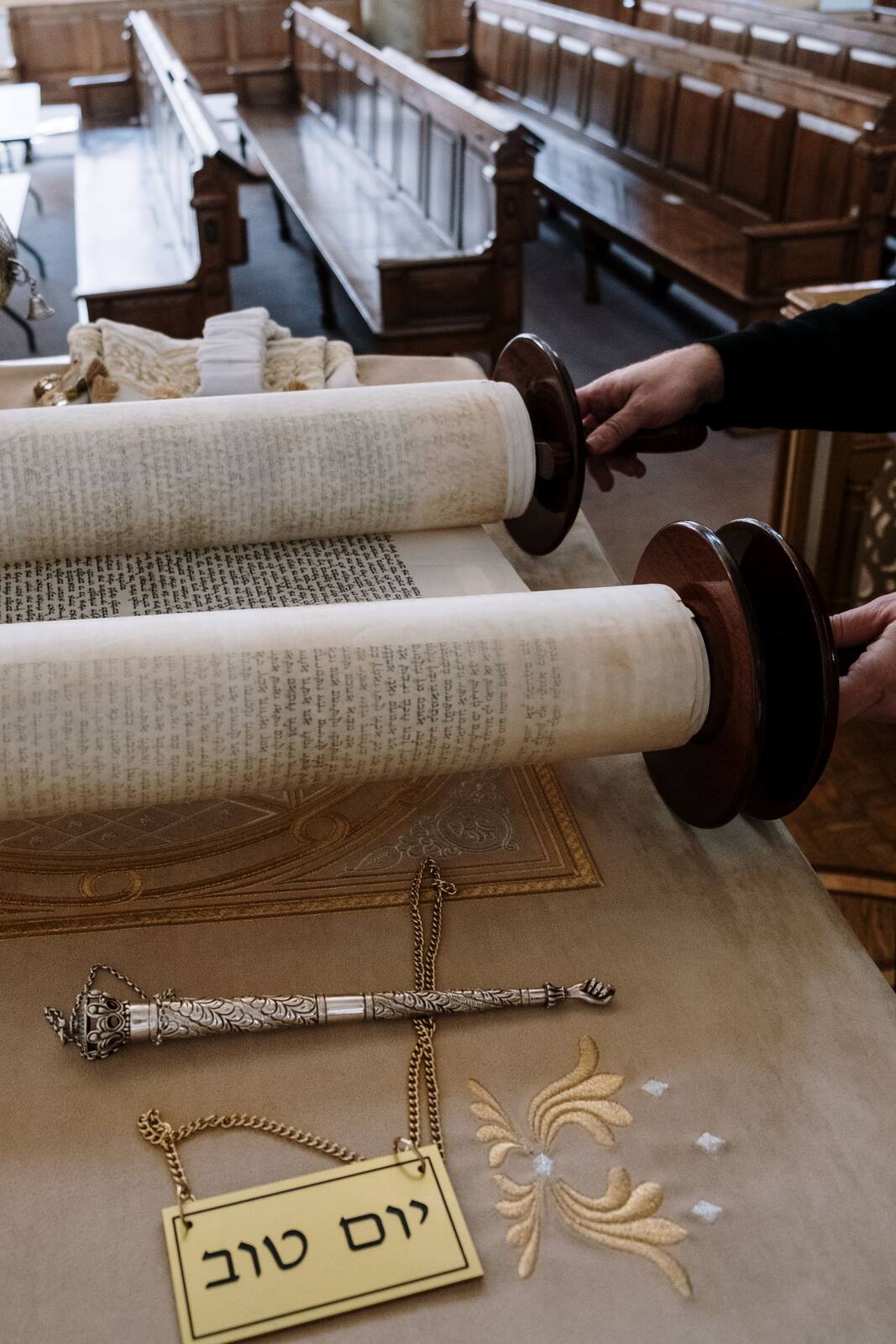
- Walk up by the shortest route when your name is called.
- The reader shows you where the reading starts. Touch the spot with the corner of your tallit or the Torah's sash, then kiss it.
- Hold the handles and say the first blessing aloud.
- Follow along quietly as the reader chants your section.
- Touch and kiss the end of the section, then say the closing blessing.
- Stay at the side of the bimah until after the next aliyah, then return to your seat by a longer route, showing reluctance to leave the Torah.
The blessings
Before the reading: You say: Barchu et Ado-nai ham'vorach. The congregation answers: Baruch Ado-nai ham'vorach l'olam va'ed. You repeat it, then say: Baruch atah Ado-nai, Elo-heinu melech ha'olam, asher bachar banu mikol ha'amim, v'natan lanu et Torato. Baruch atah Ado-nai, noten haTorah.
Translation: Blessed are You, L-rd our G-d, King of the universe, who chose us from all the nations and gave us His Torah. Blessed are You, L-rd, Giver of the Torah.
After the reading: Baruch atah Ado-nai, Elo-heinu melech ha'olam, asher natan lanu Torat emet, v'chayei olam nata b'tocheinu. Baruch atah Ado-nai, noten haTorah.
Translation: Blessed are You, L-rd our G-d, King of the universe, who gave us a Torah of truth and planted eternal life within us. Blessed are You, L-rd, Giver of the Torah.
After your aliyah
It is customary for the gabbai to say a Mi Sheberach, a blessing for you and your family. Many pledge tzedakah at this time.
In Lamorinda: Want an aliyah for a yahrzeit, birthday or simcha? Call Rabbi Labkowski at 925-384-7242 and we will arrange it and help you practice.
Common questions
I have never had an aliyah. Can I still get one?
Yes. Every Jewish man from bar mitzvah age is welcome. Ask the gabbai or Rabbi before the service, and they will gladly walk you through it.
Do I need to read from the Torah myself?
No. A trained reader chants the Torah. You only say the blessings and follow along.
What if I do not know my Hebrew name?
Ask the Rabbi. If you do not have one, he can help you choose one. See our guide to Hebrew names.
What is the Gomel blessing?
After recovering from a serious illness, giving birth or completing a dangerous journey, it is customary to say a special thanksgiving blessing, often after an aliyah. Ask the Rabbi if it applies to you.
Questions about this, or something on your mind? Message the Rabbi or the Rebbetzin privately, or call 925-384-7242. · Email
Read next
 The Torah Reading in Synagogue: When, Why and HowWhen the Torah is read in synagogue, how the weekly cycle works, what happens during the reading, and what to do as it takes place.Read next →